A print-on-demand phone case that costs about €10 to produce can sell for €35 to €60. That single fact explains why thousands of people are launching online stores this year with less money than they’d spend on a weekend trip. You do not need a warehouse, a business loan, or a pile of savings to start selling online. You need a laptop, a few hours a week, and the right idea.
This guide breaks down the most practical e-commerce business ideas with low investment available right now, based on real 2026 startup cost data. Whether you have $0 or $500 to spend, there is a model here that fits your budget and your skills.
Why Low-Investment E-commerce Business Ideas Are Thriving
Platform costs have dropped, tools have gotten smarter, and buyers trust online shopping more than ever. A basic ecommerce platform now runs about $19 to $25 a month. Print-on-demand tools are often free or under $30 a month. Affiliate marketing costs nothing to start. This means most low-investment ecommerce ideas require a real budget of tens of dollars per month, not hundreds, assuming you already own a computer and internet access.
Side-hustle data from early 2026 backs this up. Typical low-investment models, including print-on-demand, dropshipping, digital products, and small niche brands, can be launched with $0 to $40 a month in operating costs. Most owners spend five to ten hours a week on the business and can see their first sale within two to eight weeks if they market consistently. That combination of low cost and fast feedback is exactly why this space keeps growing.
Print-on-Demand Stores: Sell Custom Products With Zero Inventory
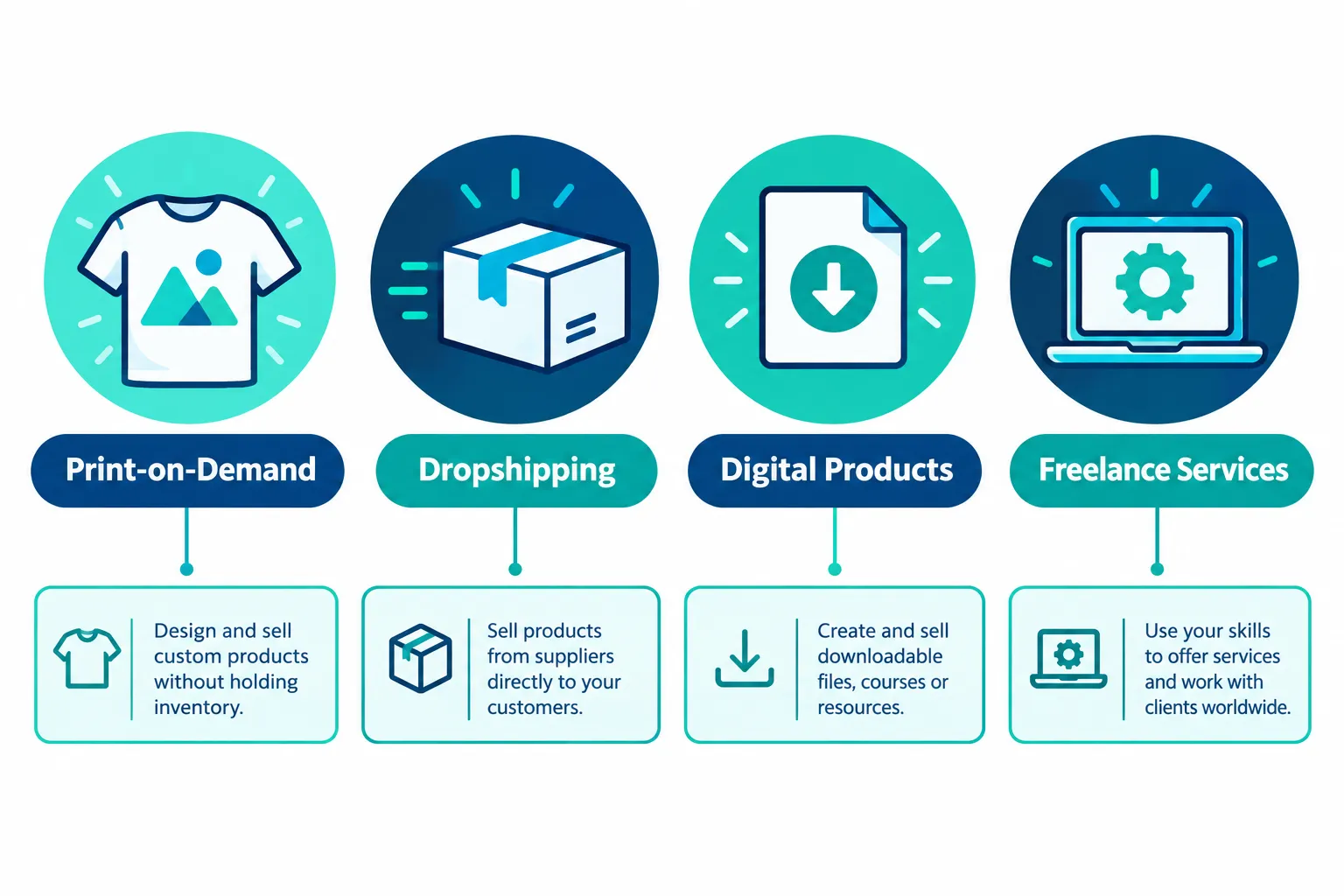
Print-on-demand, or POD, lets you sell custom-designed shirts, mugs, phone cases, and home decor without ever touching inventory. A supplier prints your design only after a customer orders it, then ships it directly to the buyer. You typically need $0 to $100 to get started, mostly for design software or a small store subscription.
Margins vary by product type. Apparel usually runs 20 to 40 percent profit, while home decor items can hit 25 to 45 percent. Those numbers are lower than pure digital products, but the barrier to entry is tiny. You can go live in one to two weeks, and there is no risk of unsold stock piling up in a closet.
Best for: People with a design sense or a strong niche audience, such as fans of a hobby, sport, or cause.
Niche Dropshipping: Low-Risk Products Without a Warehouse
Dropshipping remains one of the most recommended e-commerce business ideas with low investment for beginners. You list products in your store, and when someone buys, your supplier ships the item directly to them. You never hold stock, which removes the biggest financial risk of traditional retail.
The trick in 2026 is specialization. Generic dropshipping stores struggle to stand out. Specialized dropshipping, focused on a tight niche like camping gear, pet accessories for small dogs, or hobby tools, helps you build trust and avoid competing purely on price. Startup costs typically stay around $0 to $100, and there is no warehousing expense at all.
Best for: Anyone with deep knowledge of a specific hobby or lifestyle who can speak directly to that audience’s needs.
Digital Products: The Highest-Margin Low-Investment E-commerce Business Idea
If margin matters most to you, digital products are hard to beat. Templates, printables, planners, and similar files cost almost nothing to produce and can be sold infinitely without restocking. Startup costs sit between $0 and $50, and profit margins commonly land in the 80 to 95 percent range, with first sales often arriving within one to two weeks.
Online courses fit into this same family. They cost a bit more to produce, usually $0 to $200 once you factor in recording tools and a course platform, and take two to four weeks to land a first sale. But margins stay in that same impressive 80 to 95 percent range because there is no physical product at all.
“Your main investment is time, not inventory. Once the file or course exists, you can sell it to one customer or ten thousand.”
Best for: Teachers, designers, planners, coaches, or anyone with knowledge worth packaging into a downloadable format.
Freelance and Service-Based Online Stores
Not every ecommerce business sells a physical or downloadable product. Some of the fastest-to-launch options package a skill into a storefront. Writing, graphic design, consulting, social media management, and even AI tool setup can all be sold as service packages through an online store or booking page.
This model is rated among the cheapest ways to enter ecommerce, with startup costs around $0 to $50 and profit margins between 85 and 95 percent. Because you are selling your time and expertise rather than a manufactured item, you can often land your first paying client within days, not weeks.
Best for: People with a marketable skill who want income fast and are comfortable working directly with clients.
Affiliate Marketing and Niche Content Sites
Affiliate marketing is often described as free to start, making it one of the lowest-barrier ecommerce-adjacent businesses available. Instead of selling your own product, you recommend other companies’ products and earn a commission on each sale made through your link.
The most effective version of this in 2026 is the niche content site: a focused review blog or comparison site built around one topic, like budget travel gear or home coffee brewing. Your only real cost is website hosting, since there is no product or inventory to buy. Growth is slower than paid-traffic models, but the upside is strong because content keeps earning long after it’s published.
Best for: Writers, bloggers, and content creators willing to build an audience over time.
Online Courses, Thrift Flipping, and Subscription Boxes
Three more low-investment paths deserve a closer look because each fits a different type of entrepreneur.
- Thrift flipping and online reselling let you start with items you already own or cheap secondhand finds. This side hustle fits comfortably under $1,000 in total startup spending, and many people begin with $0 by reselling their own closet before sourcing more inventory.
- Subscription boxes cost more upfront, typically $200 to $2,000 for initial inventory and packaging, but they build recurring revenue that can pay back that investment quickly. Niche boxes built around hobbies, wellness, or eco-friendly products are drawing strong interest as buyers look for curated, mission-driven brands.
- Sustainable and eco-friendly niches are also worth watching. Zero-waste shops, DIY beauty kits, and eco-friendly home goods can often launch with a small product line and minimal inventory, appealing to shoppers who care about where their money goes.
How to Choose the Right Low-Investment E-commerce Business Idea for You
There is no single “best” option. The right choice depends on your budget, your time, and your existing skills. Here is a quick side-by-side view to help you decide.
| Business Idea | Typical Startup Cost | Profit Margin | Time to First Sale |
|---|---|---|---|
| Digital products/printables | $0,$50 | 80-95% | 1-2 weeks |
| Freelance service store | $0,$50 | 85-95% | Days |
| Affiliate niche site | $0,$100 | Commission-based | Weeks to months |
| Print-on-demand apparel | $0,$100 | 20-40% | 1-2 weeks |
| Niche dropshipping | $0,$100 | Varies by niche | 1-2 weeks |
| Online courses | $0,$200 | 80-95% | 2-4 weeks |
| Thrift flipping/reselling | Under $1,000 | Varies | Days to weeks |
| Subscription box | $200,$2,000 | Varies, recurring | Weeks |
Expert consensus across 2026 guides points to the same conclusion: the most realistic path into ecommerce with little money runs through print-on-demand, digital downloads, affiliate marketing, and niche dropshipping. These models keep your main costs limited to marketing and platform fees, not inventory. They also tend to work best when you build around a clear niche and lean on something you already know well.
Final Thoughts
Starting an online business no longer requires a big bank account. The data is clear: e-commerce business ideas with low investment, from print-on-demand shops to digital downloads to freelance service stores, can be launched for less than $100 and can realistically generate $1,000 to $5,000 a month within a couple of months of steady effort.
The path forward is simple. Pick one idea that matches a skill or interest you already have. Set a small budget, even if it’s just the cost of a monthly platform subscription. Launch something small within the next two weeks rather than waiting for the “perfect” plan. Then track what sells, adjust your niche, and reinvest early profits into growth. The businesses that succeed in 2026 are not the ones with the biggest starting budget. They are the ones that started.