

Learning how to remove fingerprints from stainless steel appliances quickly comes down to a simple two-minute routine: wipe away surface oils with a damp microfiber cloth and mild dish soap, dry thoroughly, and buff in the direction of the metal’s grain using a drop of mineral or olive oil.
Busy kitchens see dozens of touches daily, leaving behind stubborn skin oils and smudges that dull the finish. Avoiding harsh abrasives is key to protecting the protective coating. With the right technique and basic household staples, you can restore a streak-free, factory shine instantly.
Key Takeaways
- Always wipe with the grain of the stainless steel, never against it, to avoid streaks and scratches
- A 50/50 white vinegar and water solution is the most effective everyday cleaner for oily fingerprints
- Microfiber cloths are the safest and most streak-free tool for stainless steel surfaces
- A light coat of mineral oil or baby oil after cleaning helps repel future fingerprints
- Never use steel wool, abrasive scrubbers, or bleach-based cleaners on stainless steel
Why Stainless Steel Shows Fingerprints So Easily
Stainless steel has a brushed or polished surface that reacts strongly to the natural oils on human skin. When fingers press against the surface, those oils transfer instantly and create the cloudy, greasy smudges that are so visible under kitchen lighting.
The finish also has a directional grain, a series of fine parallel lines running either horizontally or vertically. That grain is the key to everything. Cleaning against the grain pushes residue into the tiny grooves and creates streaks. Cleaning with the grain pulls residue out cleanly.
Before reaching for any cleaner, run a finger lightly across the surface and look closely. The direction the lines run is the grain direction. Every wipe should follow that same path.
How to Remove Fingerprints From Stainless Steel: The Everyday Method
This is the fastest, lowest-effort approach for daily maintenance. It works on refrigerators, dishwashers, ovens, and range hoods.
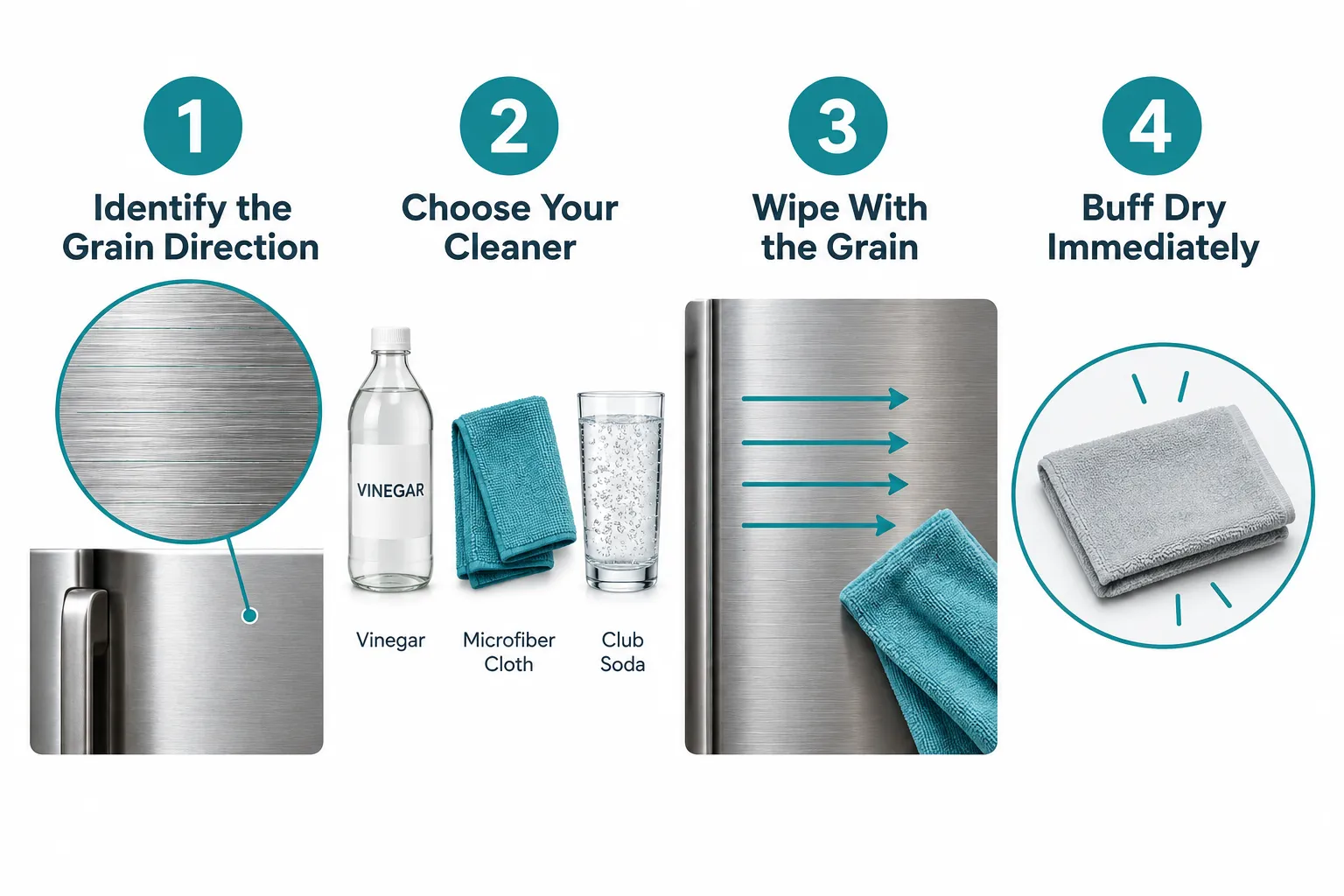
What you need:
- One clean microfiber cloth (slightly damp)
- One dry microfiber cloth
Steps:
- Dampen the microfiber cloth with plain warm water. Wring it out so it is barely moist, not wet.
- Wipe the smudged area in long, straight strokes that follow the grain direction.
- Immediately follow with the dry microfiber cloth, again moving with the grain.
- Buff gently until no moisture remains.
This method works well for light, fresh fingerprints. For older or greasier smudges, a stronger solution is needed.
How to Remove Fingerprints From Stainless Steel With Vinegar
White vinegar cuts through the skin oils that cause fingerprints better than plain water. It is affordable, food-safe, and leaves no harsh chemical residue, making it the top choice for kitchen appliances in 2026.
What you need:
- White vinegar
- Water
- A spray bottle
- Two microfiber cloths
Steps:
- Mix equal parts white vinegar and water in a spray bottle.
- Spray a small amount directly onto the smudged surface or onto the cloth.
- Wipe with the grain using firm, even strokes.
- Buff dry immediately with the second clean cloth.
“The vinegar-water ratio matters. Too much vinegar can leave a faint odor; too little reduces cleaning power. A true 50/50 mix hits the sweet spot every time.”
For stubborn, built-up grease around appliance handles, let the vinegar solution sit for 30 seconds before wiping. This gives the acid time to break down the oil.
Tackling Stubborn Smudges: Baking Soda and Vinegar Method
When fingerprints have been sitting for days or are layered over cooking grease, a two-step approach works best.
Step 1, Baking soda paste: Mix a small amount of baking soda with just enough water to form a thin paste. Apply it to the stubborn area with a soft cloth. Rub gently with the grain for 20 to 30 seconds. Baking soda is a mild abrasive that lifts stuck-on residue without scratching the surface.
Step 2, Vinegar rinse: Spray the area lightly with the vinegar-water solution. It will fizz briefly as it reacts with the baking soda. Wipe clean with the grain using a microfiber cloth, then buff dry.
This combination handles the toughest kitchen messes, including grease splatter mixed with fingerprints near stovetop controls.
Other Effective Cleaning Options
Different situations call for different tools. Here is a quick comparison of the most reliable options:
| Cleaner | Best For | Notes |
|---|---|---|
| Vinegar + water | Daily fingerprint removal | Most versatile option |
| Club soda | Light smudges + shine boost | Pour onto cloth, not surface |
| Dish soap + warm water | Greasy fingerprints | Rinse thoroughly after use |
| Stainless steel cleaner spray | Heavy smudging, full clean | Follow label directions |
| Glass cleaner (ammonia-free) | Polished (not brushed) steel | Check surface type first |
Club soda deserves special mention. The carbonation lifts oils from the surface while the minerals add a light shine. It is a surprisingly effective quick fix when nothing else is nearby.
How to Prevent Fingerprints From Coming Back
Removing fingerprints is only half the job. A light protective layer on the surface dramatically reduces how quickly smudges return.
Best options for fingerprint prevention:
- Mineral oil, Apply a few drops to a microfiber cloth and buff into the surface with the grain. Wipe off any excess. This creates a thin barrier that repels skin oils.
- Baby oil, Works the same way as mineral oil and is widely available.
- Dedicated stainless steel polish, Commercial polishes often include an oil-based protective layer built in.
Reapply the oil treatment once a week or after each deep cleaning. High-traffic surfaces like refrigerator handles may need it more often.
What to Avoid When Cleaning Stainless Steel
Using the wrong tools or products can permanently damage the finish. These are the most common mistakes:
- Steel wool or abrasive scrubbing pads, These scratch the surface and create permanent marks
- Bleach or chlorine-based cleaners, These cause pitting and corrosion over time
- Wiping against the grain, This pushes residue into grooves and causes visible streaking
- Leaving cleaners on too long, Even vinegar can dull the finish if it sits for several minutes without being wiped off
- Paper towels, These leave behind tiny fibers and can micro-scratch polished finishes; always use microfiber
Final Thoughts
Knowing how to remove fingerprints from stainless steel does not require expensive products or a lot of time. The most effective daily routine is simple: a damp microfiber cloth, a vinegar-water spray, and a commitment to always wiping with the grain. For tougher messes, the baking soda and vinegar combination handles almost anything. Finish with a light coat of mineral oil to keep the surface protected and looking clean longer.
Actionable next steps:
- Keep a spray bottle of 50/50 vinegar and water near the kitchen for quick daily touch-ups
- Stock two or three microfiber cloths dedicated to appliance cleaning
- Apply a thin coat of mineral oil to all stainless steel surfaces this week as a protective baseline
- Wipe down high-touch areas like refrigerator handles every evening to prevent buildup
Consistent, grain-aware cleaning keeps stainless steel looking sharp without scratches, streaks, or chemical damage.