
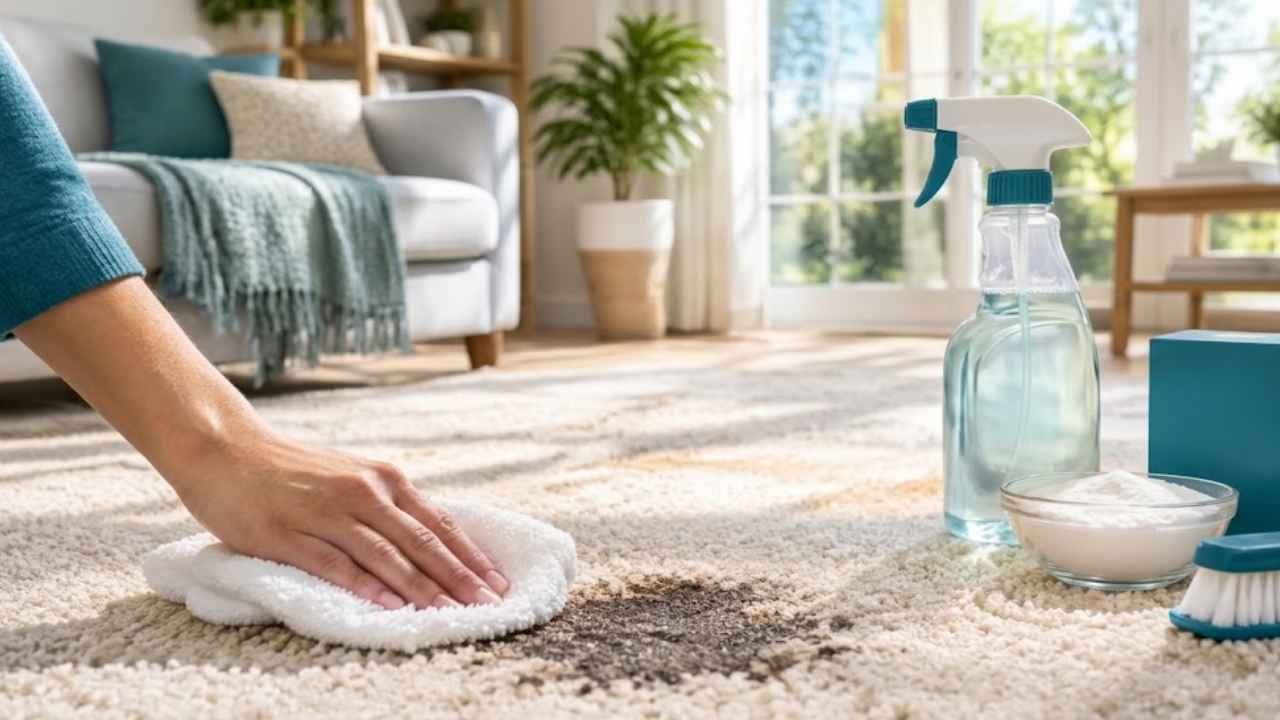
A single red wine spill can cost a renter their entire security deposit, yet most stubborn carpet stains respond to household ingredients that cost less than five dollars. Knowing how to remove stubborn carpet stains at home is one of the most practical skills any homeowner or renter can develop.
The difference between a permanent-looking mark and a clean carpet often comes down to method, timing, and the right solution for the stain type.
Why Stubborn Stains Are So Hard to Remove
Not all carpet stains are created equal. A fresh spill is easy to lift because the liquid has not yet bonded with carpet fibers. But once a stain dries, it locks into the fiber structure and can even reach the backing beneath. That is why a stain that looks “set” feels almost impossible to clean with a quick wipe.
The Institute of Inspection, Cleaning and Restoration Certification (IICRC) classifies stains into five main categories:
| Stain Type | Examples | Best Cleaner |
|---|---|---|
| Protein | Blood, vomit, egg | Cold water, enzyme cleaner |
| Water-soluble | Coffee, juice, mud | Vinegar and dish soap solution |
| Petroleum/oil | Grease, tar, makeup | Rubbing alcohol or dry solvent |
| Synthetic dye | Kool-Aid, food coloring | Reducing agent or peroxide (light carpet only) |
| Organic | Wine, berries, grass | Oxidizing agent, baking soda |
Matching the cleaner to the stain category is the single most important factor in DIY success. Using the wrong product can set the stain deeper or damage the carpet fibers.
The Golden Rules Before You Start
Before attempting to remove stubborn carpet stains at home, follow these non-negotiable rules. Breaking any one of them is the most common reason DIY attempts fail.
- Blot, never scrub. Rubbing spreads the stain and pushes it deeper into the pile. Always press a clean white cloth firmly onto the stain and lift straight up.
- Work from the outside edge inward. Starting at the center pushes the stain outward and makes it larger.
- Use white cloths only. Colored cloths can transfer dye onto wet carpet fibers.
- Spot-test first. Apply any DIY solution to a hidden area, inside a closet or under a piece of furniture, and wait five minutes. Check for color change or fiber damage before treating the visible stain.
- Use cold water for protein stains. Hot water cooks protein into the fiber, making it permanent. Blood, vomit, and pet accidents all need cold water.
- Use as little liquid as possible. Oversaturating the carpet forces moisture into the backing, where dissolved stain material can wick back up after drying, creating a “reappearing” spot.
How to Remove Stubborn Carpet Stains at Home: Step-by-Step
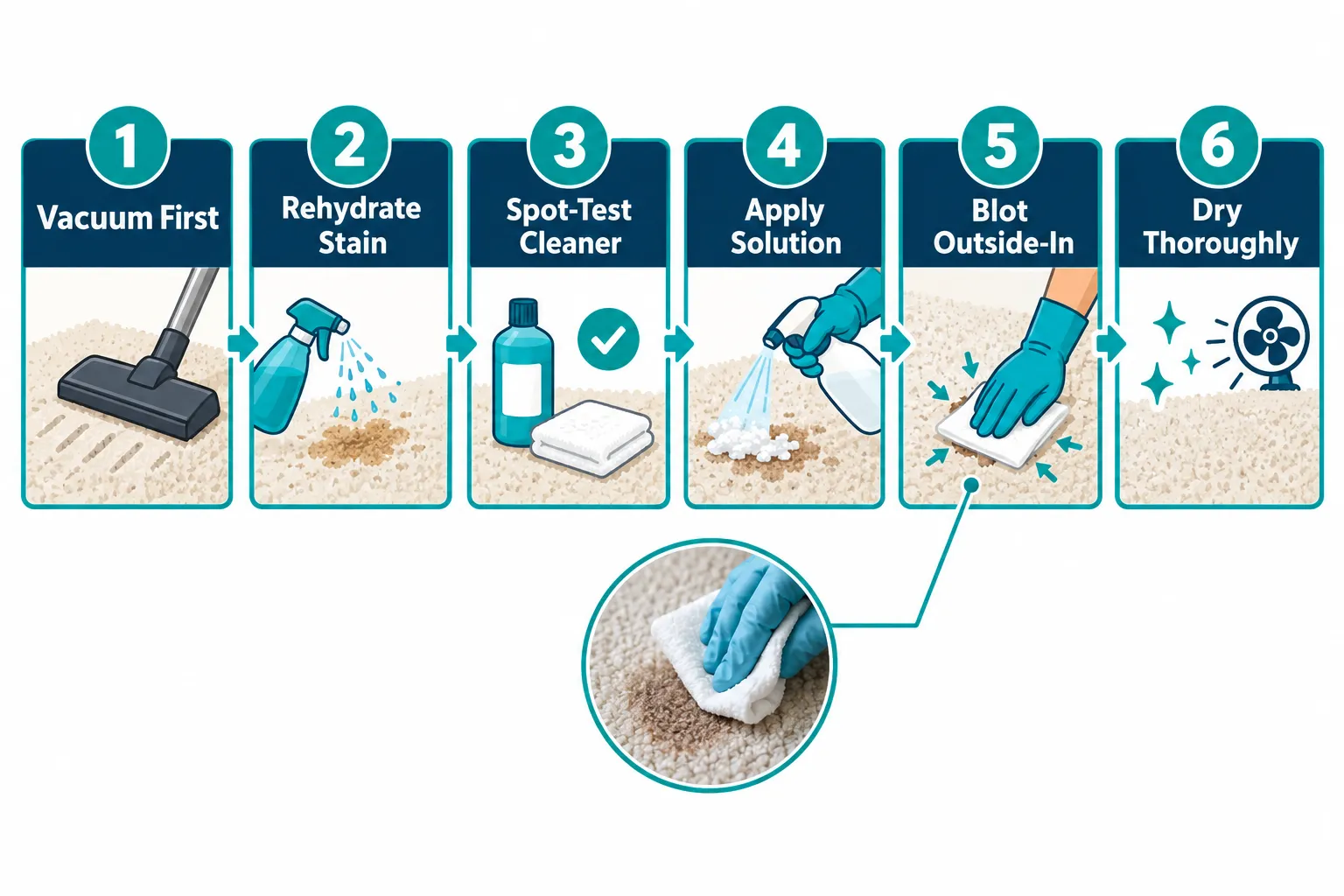
This seven-step process is built on current best practice from professional cleaning standards and updated 2026 DIY guides. It works on most household stains, including old set-in spots.
Step 1: Vacuum the Area First
Remove any dry, loose material sitting on top of the carpet. Vacuuming before applying liquid prevents dry debris from turning into a muddy paste that spreads the stain.
Step 2: Rehydrate Dried or Old Stains
This step is critical for any stain that has dried. Lightly mist the stained area with cool water (use cold water for protein stains like blood or pet accidents). Let it sit for two to five minutes. This softens the dried residue and makes the cleaning solution far more effective. Skipping this step on old stains is why so many DIY attempts fail.
Step 3: Spot-Test Your Cleaning Solution
Apply a small amount of your chosen solution to a hidden section of carpet. Wait five minutes and check for discoloration or fiber damage. Only proceed if the test area looks unchanged.
Step 4: Apply the Right Solution for the Stain Type
- For most water-soluble stains (coffee, juice, mud, food): Mix 1 cup warm water, 1 tablespoon white vinegar, and 1 teaspoon liquid dish soap. Apply a small amount directly to the stain. Let it dwell for 5 to 10 minutes before blotting.
- For grease, oil, or ink: Dampen a clean cloth with plain rubbing alcohol. Press it onto the stain and let it sit for three to five minutes. Blot and repeat as needed.
- For protein stains (blood, vomit, pet accidents): Mix one-quarter teaspoon of dish soap with one cup of cold water. Apply, dwell for five minutes, and blot. For persistent odor, follow with an enzyme cleaner designed for pet stains.
- For old or deeply embedded discoloration: Sprinkle baking soda generously over the stain. Mist with a 1:1 solution of white vinegar and water until it foams. Allow it to dry completely, several hours or overnight, then vacuum up the hardened residue. Repeat if needed.
- For residual color on light-colored carpets: Mist the area lightly with 3% hydrogen peroxide (the standard drugstore concentration). Allow it to dwell for 10 to 15 minutes, then blot and rinse. Never use hydrogen peroxide on dark or natural-fiber carpets without extensive spot-testing, as it can bleach the color out permanently.
Step 5: Blot from the Outside Edge Inward
Using a clean white cloth, press firmly onto the outer edge of the stain and lift. Move inward with each blot. Never rub in a circular motion. Replace the cloth as it picks up color.
Step 6: Rinse with Clean Water
Once the stain has lifted, blot the area with a cloth dampened with plain clean water. This removes cleaning solution residue. Leftover soap or vinegar attracts new soil and can cause the area to look dirty again within days.
Step 7: Dry Thoroughly
Place several layers of clean white towels over the treated area. Weigh them down with a heavy book or pot. Leave in place for several hours. Point a fan at the area to speed drying. Do not walk on the carpet until it is fully dry. Incomplete drying is the leading cause of stains “coming back”, dissolved material wicks up from the backing as the carpet dries from the top down.
When to Call a Professional
Some situations go beyond DIY. Consider calling a certified carpet cleaner when:
- The stain covers a large area or has soaked through to the padding.
- There is a persistent odor after multiple treatments.
- The carpet shows visible color change or fiber damage after a DIY attempt.
- The stain involves bleach, strong chemicals, or unknown substances.
A professional with IICRC certification has access to industrial extraction equipment and matched chemistry that can resolve problems that household products cannot.
Final Thoughts
Knowing how to remove stubborn carpet stains at home saves money, protects security deposits, and extends the life of flooring. The most important principles are simple: identify the stain type, rehydrate dried spots before treating them, match the cleaning solution to the stain category, blot from the outside in, and dry the area completely.
Actionable next steps:
- Keep a basic stain kit ready: white cloths, white vinegar, dish soap, baking soda, rubbing alcohol, and 3% hydrogen peroxide.
- Act on fresh stains within minutes, the sooner liquid is blotted up, the less work the cleaning solution has to do.
- For old or set-in stains, always rehydrate first and allow dwell time. Patience and repetition outperform aggressive scrubbing every time.
- When a stain resists two or three treatment cycles, contact a certified professional rather than risk damaging the carpet further.
With the right approach, most stains that look permanent are not.