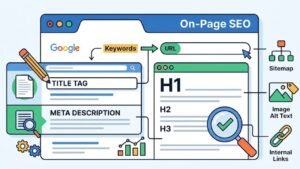
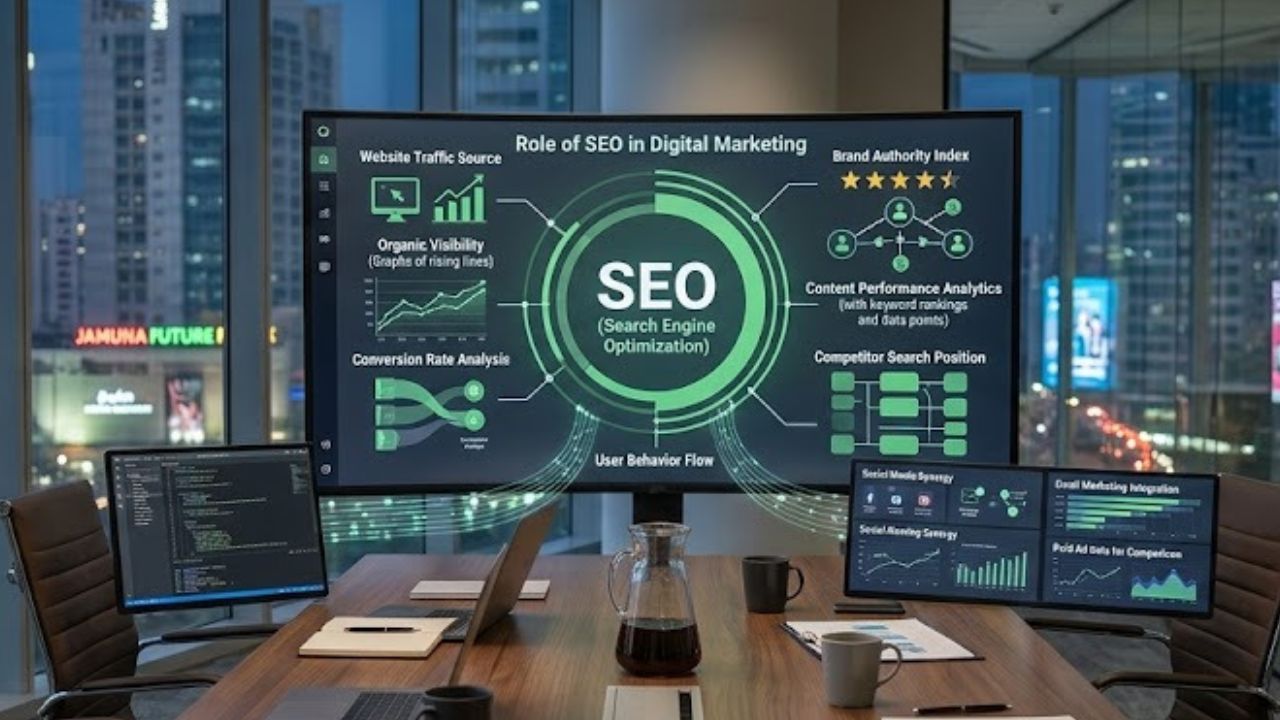
The core role of SEO in digital marketing is to build a high-intent discovery engine that connects brand messaging directly with active buyer intent. Rather than treating search optimization as a standalone tactical task, modern organizations rely on search engine optimization (SEO) as the underlying infrastructure across paid media, content marketing, and technical user experience.
By pairing traditional search visibility with Answer Engine Optimization (AEO) for featured snippets and Generative Engine Optimization (GEO) for AI platform citations (such as ChatGPT, Perplexity, and Google AI Overviews), SEO captures high-value demand, establishes category authority, and reduces long-term customer acquisition costs (CAC). Ultimately, strategic SEO transforms temporary ad traffic into permanent, compounding digital equity.
The Silent Problem in Modern Marketing Architecture
When digital marketing channels operate in silos, marketing budgets leak efficiency at every stage of the funnel.
The Paid Acquisition Treadmill
Paid media platforms like Google Ads, Meta, and LinkedIn offer immediate feedback and rapid pipeline scaling. However, relying exclusively on paid acquisition exposes a business to significant financial friction. Ad auction costs trend upward over time, creative fatigue sets in quickly, and the moment campaign budgets are adjusted downward, prospect traffic stops instantly. Paid media rents traffic; it does not build enterprise equity.
Uncaptured Brand Curiosity
Creative brand marketing builds mental recall. When a prospect hears your executive on a podcast, reads a PR feature, or sees a targeted ad, they rarely type your exact web address directly into a browser. They open a search bar and type your company name, your product category, or the underlying operational problem they are trying to solve.
If your web presence lacks visibility for those problem-centric queries, that hard-won curiosity goes uncaptured. Prospects end up on competitor comparison sites, third-party review forums, or rival landing pages that rank at the top of the search engine results page (SERP). Unfocused brand spending effectively subsidizes lead generation for your competitors.
Defining the Role of SEO in Digital Marketing
Search engine optimization is not just one of many marketing options alongside social media and email. It is the underlying discovery layer that validates and captures intent created by every other channel.
Traditional SEO asks: “How do we get this web page to rank higher for a specific search query?”
Strategic SEO asks: “How do we structure our brand authority, technical infrastructure, and content architecture so search engines and AI engines recognize us as the default solution in our market?”
Search architectures no longer view the web as a loose collection of matching keywords. Modern search engines evaluate the web as a network of interconnected entities—organizations, products, key personnel, and domain topics.
Evaluating the role of SEO in digital marketing through an entity-based lens changes how you build web properties. Instead of publishing disconnected articles, your marketing team builds a structured digital footprint that search systems can parse, categorize, and trust.
4 Pillars of an Integrated Organic Search Strategy
To turn search engine optimization into a predictable revenue driver, marketing organizations must execute across four core pillars simultaneously.
1. Brand SERP Ownership and Reputation Control
Your “Brand SERP” is the search results page that appears when a user explicitly searches for your company name or flagship products. It serves as your primary digital storefront for high-intent prospects who are actively evaluating your company.
- Knowledge Graph Integration: Claim and verify official business profiles, corporate directories, and structured Knowledge Panels. Ensure your official company description, headquarters, key executives, and official social channels are consistent across public databases like Wikidata.
- Branded Search Real Estate: Ensure the entire first page of results for your company name is dominated by properties you own or control—main domain sitelinks, official social profiles, verified app store listings, and strategic PR features.
- Commercial Branded Queries: Create dedicated, honest landing pages for mid-funnel queries like [Company Name] pricing, [Company Name] reviews, and [Company Name] vs [Competitor]. If you do not publish an official comparison page, a rival brand or affiliate reviewer will fill that void and shape the narrative for you.
2. Topic Clusters and Category Authority
To capture prospective buyers long before they know your brand name, structure your content into comprehensive topic clusters rather than publishing isolated, random blog posts.
Organize these clusters logically: start with comprehensive pillar hubs that define major capabilities, supported by tightly focused sub-topic articles that resolve narrow execution questions. Connect these pieces with explicit internal links so crawlers and users alike can navigate your expertise without dead ends.
3. Technical Health and Structural Schema
Technical search performance directly impacts how efficiently search engines crawl, index, and understand your website assets.
Maintain strict user experience performance thresholds using Core Web Vitals:
- Largest Contentful Paint (LCP): Measures loading speed. Aim for 2.5 seconds or faster.
- Interaction to Next Paint (INP): Measures visual responsiveness to user actions. Aim for 200 milliseconds or less.
- Cumulative Layout Shift (CLS): Measures visual page stability during load. Aim for a score below 0.1.
Pair user-facing performance with clean structured data markup using JSON-LD:
- Organization schema on the homepage establishing corporate identity and official profiles (sameAs).
- Product and Offer schema on solution pages outlining capabilities.
- Article and Author schema on educational resources to establish subject-matter expertise.
4. Digital PR and Authority Acquisition
Low-value link building—such as spammy guest post directories or automated link exchanges—yields minimal long-term value and risks search engine penalties. Modern authority acquisition focuses on earned digital PR and organic brand citations.
Publish original benchmark reports, industry surveys, or anonymized usage data that trade journalists and industry bloggers can cite as primary sources. Put executive leadership forward for media commentary, and regularly audit the web to turn unlinked brand mentions into functional contextual links.
Comparing Digital Marketing Channels
Evaluating these channels side-by-side illustrates how organic search complements other primary growth engines:
| Channel Metric | Performance Paid Ads | Social Media Marketing | Integrated Organic SEO |
| Primary Objective | Immediate direct response | Brand engagement & community | Sustainable demand capture & authority |
| Cost Dynamics | Variable media spend (CAC rises over time) | Continuous creative production costs | Upfront asset creation that compounds value |
| Asset Longevity | Zero residual value when spend stops | Short content lifespan (hours/days) | Long-term visibility (months/years) |
| Intent Level | Mixed (Interruptive or targeted search) | Low to Medium (Passive feed scrolling) | Very High (Active problem-solving search) |
How Organic Search Empowers Other Marketing Channels
Organic search does not work in opposition to other marketing channels; it amplifies their performance across the board.
SEO + Paid Search (PPC)
Sharing keyword conversion data between paid and organic teams prevents wasted budget. High-cost paid search keywords can be targeted with dedicated organic content clusters to lower reliance on paid ads over time. Conversely, top-performing paid ad headlines can inform organic title tags to boost organic click-through rates (CTR).
SEO + Content Marketing
Content creation without search engine optimization often leads to high-quality articles that nobody ever finds. Integrating search research ensures that your editorial team addresses the exact terminology, questions, and pain points that your ideal buyers are actively searching for online.
SEO + Conversion Rate Optimization (CRO)
Traffic volume is meaningless if visitors leave without taking action. Aligning search intent with clear on-page conversion paths ensures that users landing on your site find the immediate answers they need along with logical next steps—such as downloading a technical whitepaper, requesting a product demo, or using an interactive tool.
Implementation Roadmap: Integrating SEO Into Your Marketing Engine
Aligning search strategy with broader business goals requires a methodical, phased approach. Use this quarterly framework to structure your implementation.
Phase 1: Technical & Entity Foundation (Months 1–3)
Conduct a complete technical audit to resolve site performance bottlenecks, broken redirect chains, and mobile usability issues. Audit how search engines currently view your brand by searching your company name in clean browser sessions. Implement Organization schema markup across your site to clearly define your brand entity to search engines.
Phase 2: Buyer Intent Mapping (Months 4–6)
Collaborate with sales, customer support, and product teams to compile a list of the top questions prospective buyers ask during the sales process. Map these questions directly to search queries and categorize them by funnel stage:
- Top-of-Funnel: Educational guides, conceptual frameworks, and broad industry trends.
- Middle-of-Funnel: Comparison tables, feature breakdowns, and ROI calculators.
- Bottom-of-Funnel: Pricing details, implementation specifications, and customer case studies.
Phase 3: Topic Cluster Buildout & PR (Months 7–9)
Produce comprehensive topic clusters around core problem areas. Ensure every piece of content includes original insights from internal subject-matter experts rather than rehashed web summaries. Simultaneously, launch a digital PR campaign centered on proprietary industry data or survey findings to earn high-authority media mentions.
Phase 4: Integrated Measurement (Months 10–12)
Connect your search analytics directly to pipeline metrics. Track conversion events, organic lead attribution, and improvements in blended customer acquisition costs alongside traditional search metrics like keyword rankings and organic traffic volume.
Practical Execution Traps to Avoid
Even well-funded marketing teams can make predictable mistakes when integrating search into their broader strategy. Avoid these common operational traps:
- Publishing Low-Quality, Commodity Content: Mass-producing generic, automated articles without subject-matter expert review hurts your site’s reputation with both human readers and search engine quality raters. Every publication must offer genuine, expert insights.
- Targeting High-Volume Vanity Metrics: Ranking for broad, high-volume keywords that have no connection to your actual product offerings inflates traffic statistics without generating qualified sales leads. Prioritize lower-volume, high-intent terms that attract active decision-makers.
- Ignoring On-Page Intent Matching: If a user searches for a straightforward pricing comparison, sending them to a 3,000-word introductory essay creates friction. Deliver the core information immediately at the top of the page before expanding into broader context.
- Treating Search as a One-Time Technical Project: Search engines continuously update their algorithms, market competitors publish new assets, and buyer search behavior evolves. Maintaining search leadership requires ongoing refinement, content updates, and technical maintenance.
What to Fix First If Your Search Strategy Is Failing
If organic search is driving traffic that fails to convert into revenue, evaluate these critical areas first:
- Check Commercial Keyword Alignment: Are you ranking primarily for top-of-funnel informational terms while competitors capture bottom-of-funnel queries like [Category] software pricing or best [Category] tools for enterprise?
- Review On-Page Call to Action (CTA) Clarity: Is there a clear, relevant next step on your highest-traffic pages, or are readers forced to hunt for contact forms and demo links?
- Audit Technical Loading Performance: Does your page pass Core Web Vitals on mobile devices? Slow LCP or unstable visual layout (CLS) causes immediate bounce rates among mobile searchers.
- Evaluate Subject-Matter Expert Depth: Does your published content offer practical, original solutions, or does it simply repeat the top five search results already ranking on Google?
Final Thoughts
A mature growth model does not force a choice between brand building and search engine optimization—it unifies them.
Understanding the true role of SEO in digital marketing allows businesses to convert temporary marketing interest into a permanent, compounding revenue engine. By aligning technical site health, topic authority, and entity signals with your overarching brand messaging, you protect your market share, lower overall acquisition costs, and build a resilient digital presence that drives business growth over the long term.