Type “NPC” into any search bar and you will find two very different worlds colliding. One is a video game shopkeeper who sells you a sword. The other is a Gen Z insult hurled at strangers online. Both meanings trace back to the same three letters, and both are exploding in popularity right now. Dictionary editors added updated entries for the term in 2026, and slang trackers expanded their definitions again in May 2026 to capture how far the word has traveled from its gaming roots.
So what is NPC in gaming, really? At its core, NPC stands for “non-player character” or “non-playable character.” It is any character in a game that a human does not directly control. Understanding this simple idea unlocks a much bigger conversation about game design, internet culture, and even how people talk about each other in daily life. This guide breaks down everything a beginner, parent, or curious reader needs to know.
What is NPC in Gaming: The Core Definition
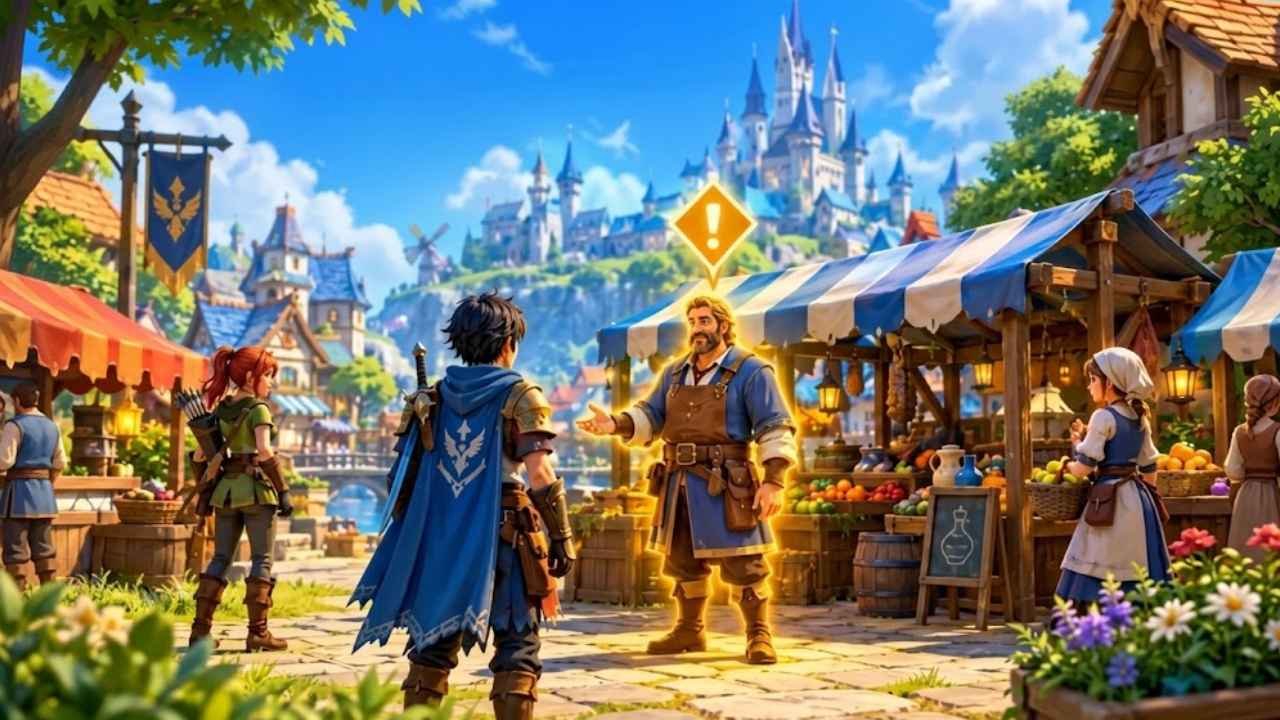
At the most basic level, answering “what is NPC in gaming” starts with a simple rule: if a human is not steering the character with a controller, keyboard, or mouse, it is an NPC. The game’s software controls these characters instead. They might walk around a virtual village, hand out quests, guard a treasure room, or simply stand in the background to make a world feel alive.
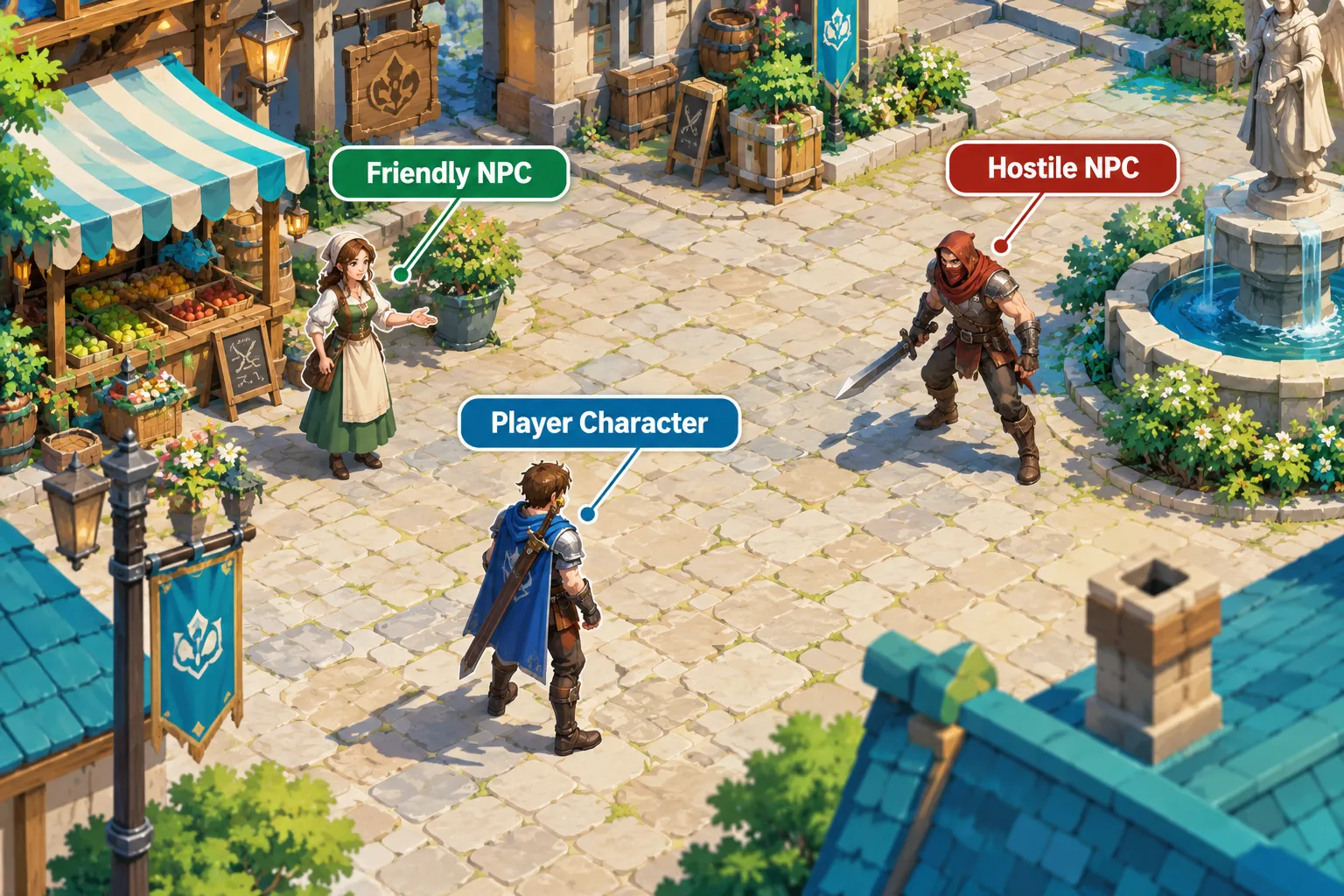
Think about a role-playing game. The player controls one hero. Everyone else in that game world, the blacksmith, the guard at the gate, the dragon blocking the road, is an NPC. They follow pre-written scripts, respond to specific triggers, or use simple decision-making rules called artificial intelligence, or AI. This does not mean advanced, humanlike AI. It usually means a set of basic instructions the character follows.
The term is not limited to fantasy games. Sports games, racing games, and shooters all use NPCs too. A computer-controlled opponent in a racing game is an NPC. A background pedestrian in an open-world city game is an NPC. The label applies anywhere a game needs a character that is not the player.
Friendly, Neutral, and Hostile NPCs Explained
Not all NPCs behave the same way, and game designers usually sort them into three categories based on how they treat the player.
- Friendly NPCs help the player. They give quests, sell items, offer advice, or heal the player’s character. A town elder who explains the game’s story is a friendly NPC.
- Neutral NPCs neither help nor hurt the player unless provoked. A wild animal that only attacks if approached is a common example. Neutral NPCs often add realism without forcing conflict.
- Hostile NPCs actively work against the player. These are typically enemies, monsters, or rival soldiers designed to challenge the player through combat or obstacles.
This three-part system helps explain the terminology nuance many beginners miss. Not every NPC is an enemy, and not every NPC is a helper. The category depends entirely on the role the designer gives that character within the game world.
The Role of NPCs in Game Design
Game designers rely on NPCs to do far more than fill empty space. NPCs are one of the most important tools for building an immersive game world. Without them, most games would feel empty and lifeless.
Here is how NPCs typically function within a game’s design:
| NPC Function | What It Does |
|---|---|
| Quest giver | Assigns missions or tasks to the player |
| Merchant | Buys and sells items, weapons, or resources |
| Storyteller | Delivers narrative details through dialogue |
| World-builder | Fills towns, streets, and battlefields with life |
| Obstacle | Blocks progress or challenges the player in combat |
| Companion | Joins the player’s party and assists during gameplay |
Every one of these roles serves the larger goal of making a game feel like a believable place. A city with no NPCs walking the streets feels hollow. A dungeon with no guards feels pointless. Designers carefully place NPCs to guide players toward objectives, reveal backstory, and create emotional stakes.
Some modern games even use NPCs to teach players game mechanics. A tutorial character explaining how to jump or fight is technically an NPC performing an instructional role.
Where Did the Term NPC Come From?
The idea of an NPC did not start with video games at all. It began at the tabletop, specifically in pen-and-paper role-playing games like Dungeons & Dragons during the 1970s. In those games, one person acts as the “game master,” controlling every character the players do not directly play. Those characters became known as non-player characters.
When video games began adopting role-playing mechanics in the 1980s and 1990s, developers borrowed the term directly. It made sense. A computer-controlled shopkeeper in a video game served the same purpose as a game master’s shopkeeper character in a tabletop session. The phrase stuck, and it has stayed part of gaming language ever since.
This history matters because it shows that NPC was never meant to be an insult. It was a practical, technical term used by game designers and players to describe a specific function within a structured game system.
What is NPC in Gaming Slang: The Internet Insult Explained
Here is where the story takes an interesting turn. Around the early 2020s, internet communities began using “NPC” outside of gaming entirely. People started calling other individuals “NPCs” as an insult, suggesting that person seemed to lack independent thought, personality, or free will, as if they were simply following a script, like a background character in a video game.
By 2026, this usage had become common enough that major dictionaries and slang reference guides formally updated their entries to reflect it. The expanded meaning acknowledges that NPC now functions as both a gaming term and a piece of everyday internet slang. Slang trackers refreshed their definitions again in May 2026, noting the term’s continued spread across memes, social media commentary, and even political discourse.
“NPC” has quietly become one of gaming’s most successful cultural exports, a technical term that escaped its original context entirely.
This shift is a good reminder for parents and newcomers to online spaces. If someone hears the word “NPC” used to describe a real person, it is almost always meant as a dismissive insult, not a literal gaming reference. Context matters a lot here, and the tone is usually mocking or dismissive.
International Usage and Translation
The spread of NPC as slang has not stayed confined to English-speaking internet culture. In Russian-language gaming and internet communities, the term has been adapted phonetically and used in similar ways, both as a gaming term and as a social insult describing conformity. Vietnamese gaming forums and social media have also picked up the phrase, often blending it with local slang to describe people perceived as unoriginal or overly compliant.
This international adoption shows how deeply gaming vocabulary has merged with global internet culture. A term coined for tabletop dice games decades ago now appears in memes and conversations across multiple languages and continents.
Niche and Unexpected Uses of NPC
Beyond gaming and general slang, the term NPC has found a few smaller, specialized uses worth knowing about.
- Virtual world spaces: In some online communities and virtual reality platforms, “NPC” describes background avatars or automated figures populating a digital environment.
- Plural systems discussions: In some online mental health and identity communities, individuals who experience multiple distinct identity states have occasionally used gaming terminology, including NPC, to describe certain internal experiences. This usage is niche and specific to particular online communities, and it differs significantly from both the gaming definition and the slang insult.
These examples show just how flexible the term has become. A single three-letter acronym now stretches across game design manuals, meme culture, international slang, and specialized online communities.
How Mainstream Media Explains NPCs to Non-Gamers
As gaming culture has moved into the mainstream, news outlets and general-audience publications have increasingly needed to explain NPC to readers who do not play video games. These explainers typically boil the concept down to one simple sentence: an NPC is any character in a game that the computer controls instead of a human player.
This simplified framing helps parents, teachers, and casual observers understand both the gaming meaning and the slang meaning at once. Once someone understands that an NPC follows a script rather than making independent choices, the insult version of the term makes intuitive sense, even to someone who has never touched a game controller.
The Future of NPCs: AI and Beyond
Recent developer-focused guides published in 2026 have placed heavy emphasis on artificial intelligence as the next major shift in how NPCs work. Traditionally, NPCs followed fixed scripts. Say a certain word, and the NPC gives a pre-written response. Walk into a certain area, and the NPC starts a fight.
New AI tools are beginning to change that. Some experimental games now let NPCs generate dialogue in real time, respond to unscripted player questions, and adjust their behavior based on unique player choices. This is still an emerging and largely speculative area of development, and most mainstream games have not fully adopted these systems yet.
If this trend continues, the definition of NPC itself may evolve again. Future NPCs might feel less like scripted background characters and more like dynamic digital personalities. That said, industry experts caution that widespread adoption is still years away, and current AI-driven NPCs remain limited compared to fully human-written dialogue systems.
Final Thoughts
So, what is NPC in gaming? At its heart, it is a simple, practical term: any character in a game controlled by the computer rather than a human player. NPCs give games their life, structure, and story. They hand out quests, sell goods, guard dungeons, and populate towns with the kind of background detail that makes virtual worlds feel real.
But the story does not end there. NPC has grown into something bigger than gaming vocabulary. It is now recognized slang for describing people perceived as lacking independent thought, it appears in multiple international languages, and it continues to evolve alongside new AI technology.
For anyone new to gaming culture or online communities, the key takeaway is this: context always matters. If someone mentions an NPC in a video game, they mean a computer-controlled character. If someone calls a real person an NPC online, they are using internet slang, usually as an insult. Knowing the difference makes it much easier to navigate both gaming spaces and internet culture with confidence. The next time this term pops up in a conversation, a game review, or a social media post, that context will make all the difference.