Seventy-five percent of customers use online search to find local businesses before ever stepping through a door. That single fact reshapes every decision a small business owner should be making right now. The good news: the most effective local marketing ideas to get more customers do not require a massive budget. They require focus, consistency, and the right mix of digital and community-based tactics aimed at a very specific geography.
Whether running a dental practice, a plumbing company, a boutique retail shop, or a neighborhood gym, the strategies below are built for 2026 realities, where hyperlocal search, social proof, and tight-radius targeting outperform broad, generic campaigns every time.
Start With Hyperlocal Search Optimization
The foundation of any strong local marketing strategy is visibility in search and on maps. When someone types “plumber near me” or “best dentist in [neighborhood],” the businesses that appear first win the call.
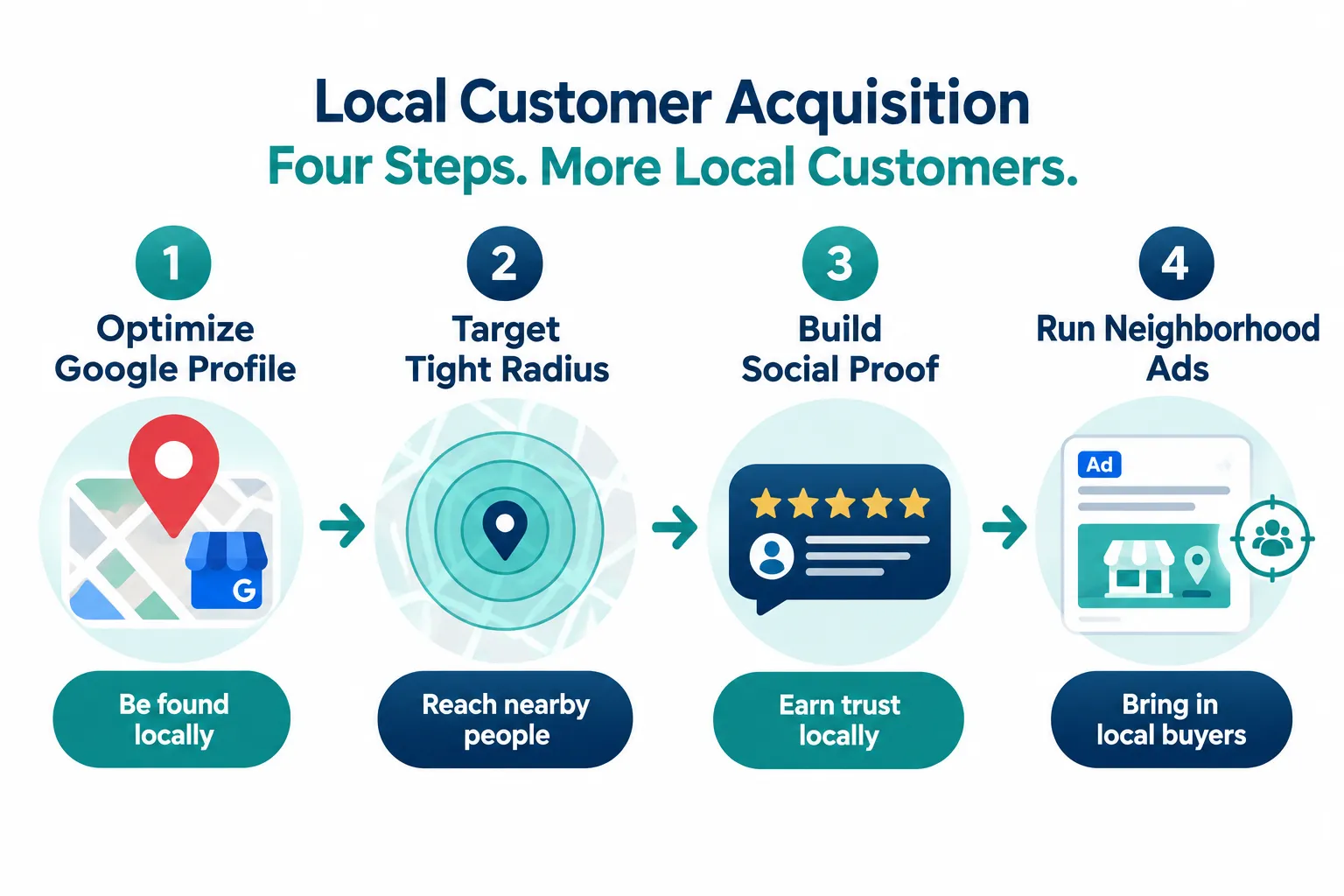
Google Business Profile (GBP) is the most important free tool available to local businesses. Claiming, completing, and actively managing this profile, with accurate hours, photos, services, and responses to reviews, directly affects how often a business appears in local map results.
Beyond GBP, consider these hyperlocal search tactics:
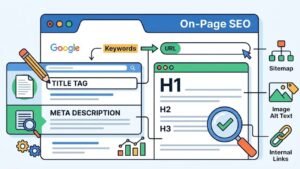
- Use neighborhood-level keywords in website copy, such as “HVAC repair in [specific neighborhood]” rather than just the city name
- Optimize for voice search by including natural-language phrases like “best Thai food open near downtown [city]”
- Create location-specific landing pages if serving multiple neighborhoods or ZIP codes
- Keep operating hours and inventory updated in real time, showing live stock levels or “available today” signals win customers who are comparing options on the spot
Businesses that treat local SEO as a living, ongoing process, not a one-time setup, consistently outperform competitors who set it and forget it.
Use Tight-Radius Geo-Targeting to Dominate Your Neighborhood
One of the highest-ROI local marketing ideas to get more customers is shrinking the target area rather than expanding it. Instead of running ads across an entire city, focus on a radius of 500 meters to 3 kilometers around the business location.
Why tight-radius targeting works:
| Approach | Typical Result |
|---|---|
| City-wide ad targeting | High impressions, low relevance, wasted spend |
| Tight-radius geo-targeting | Lower impressions, higher conversion, lower cost per customer |
Tools like GPS targeting, geo-fencing, and neighborhood-specific ad sets on Meta and Google allow businesses to reach only the people most likely to walk in. A gym, salon, or clinic does not need customers from across town, it needs customers from the next few streets.
Pair digital geo-targeting with offline hyperlocal tactics:
- Residential mailers delivered to households within a 1-3 km catchment
- Elevator or lobby advertising in nearby apartment buildings
- Flyers with unique promo codes to track walk-in conversions
The promo code approach is critical. It turns offline advertising into measurable data, showing exactly which channels are driving foot traffic.
Build a Proof-First Reputation System
In 2026, local marketing has shifted from pushing messages to leading with proof. Nearby customers searching for a service are not just looking for options, they are looking for reasons to trust one business over another.
“Proof-first optimization means every touchpoint, from your Google listing to your landing page, leads with real customer outcomes, not marketing claims.”
A structured review-generation system should be a core business process, not an afterthought. Here is a simple framework:
- Ask at the right moment, request a review immediately after a positive service interaction, via SMS or email
- Make it frictionless, send a direct link to the Google or Yelp review page
- Respond to every review, both positive and negative, publicly and professionally
- Display reviews prominently, embed them on the website homepage and service pages
Businesses with a steady flow of recent, authentic reviews consistently convert more nearby searchers into paying customers. Ratings and testimonials are not just reputation management, they are active conversion tools.
Leverage Social Media and Email for Local Reach
Unpaid social media, social ads, and email are the dominant digital channels for small businesses right now. Roughly two-thirds of small businesses use unpaid social posting, more than half run social ads, and about half rely on email marketing as a core channel.
What works for local social media:
- Post neighborhood-specific content, local events, community news, behind-the-scenes stories from the business
- Use location tags and local hashtags on every post
- Run targeted ad sets aimed at users within a specific ZIP code or radius
- Feature real customers and local stories to build community connection
Email and SMS nurturing keep existing customers coming back and remind them to refer friends. A monthly email with a local offer, a seasonal tip relevant to the neighborhood, or a loyalty reward drives repeat visits without requiring any new ad spend.
The key insight: 48% of small business owners expect social media to deliver the most marketing value in 2026, and budgets are increasing to match. Businesses that build consistent, neighborhood-relevant content now will have a significant advantage over those who post sporadically.
Partner With Nearby Businesses for Warm Audiences
One of the most underused local marketing ideas to get more customers is the strategic local partnership. Instead of spending to reach cold audiences, partnering with a nearby business means accessing warm, pre-qualified customers who already trust someone in the community.
Effective local partnership formats:
- Cross-promotions, a gym and a healthy meal prep service offering a joint discount
- Bundle offers, a hair salon and a nail studio creating a combined service package
- Shared events, a bookstore and a coffee shop co-hosting a monthly author night
- Co-branded social content, two complementary businesses featuring each other to their respective local audiences
The best partnerships involve businesses that serve the same customer profile but do not compete directly. These relationships build credibility quickly and cost far less than paid advertising.
Invest in Loyalty, Retention, and AI-Powered Tools
Acquiring a new customer costs significantly more than retaining an existing one. Yet many local businesses spend the majority of their marketing budget chasing new cold audiences while neglecting the customers they already have.
Local loyalty and retention strategies that work:
- A simple punch-card or digital loyalty program tied to a CRM
- SMS or email reminders for repeat services (annual checkups, seasonal maintenance, refills)
- Remarketing ads shown only to people who have already visited the website or physical location
- Personalized offers based on past purchase history
On the technology side, AI marketing tools have moved from novelty to mainstream. More than half of small business owners already use AI tools for tasks like writing ad copy, personalizing email campaigns, and optimizing ad spend. Another quarter plan to start in 2026. These tools are now accessible at small business price points and can meaningfully improve the efficiency of local campaigns.
Show Up Like Part of the Community
Local customers choose businesses they feel connected to. Simply listing a city name on a website is no longer enough to signal genuine local presence.
Community-first tactics that build real local loyalty:
- Attend or sponsor local events, school fundraisers, or neighborhood festivals
- Share neighborhood-specific tips and content on social media (not just promotional posts)
- Participate in local Facebook groups, Nextdoor, or community forums, helpfully, not just self-promotionally
- Highlight local team members, local suppliers, or community causes the business supports
This kind of visible community presence generates word-of-mouth referrals that no ad budget can replicate. It also signals to search algorithms that the business is genuinely embedded in a specific location, which supports local SEO rankings over time.
Final Thoughts
The most effective local marketing ideas to get more customers in 2026 share a common thread: they are specific, measurable, and rooted in the actual community the business serves. Broad campaigns and generic messaging no longer compete with businesses that show up in local search, lead with verified social proof, target tight geographies, and build genuine community relationships.