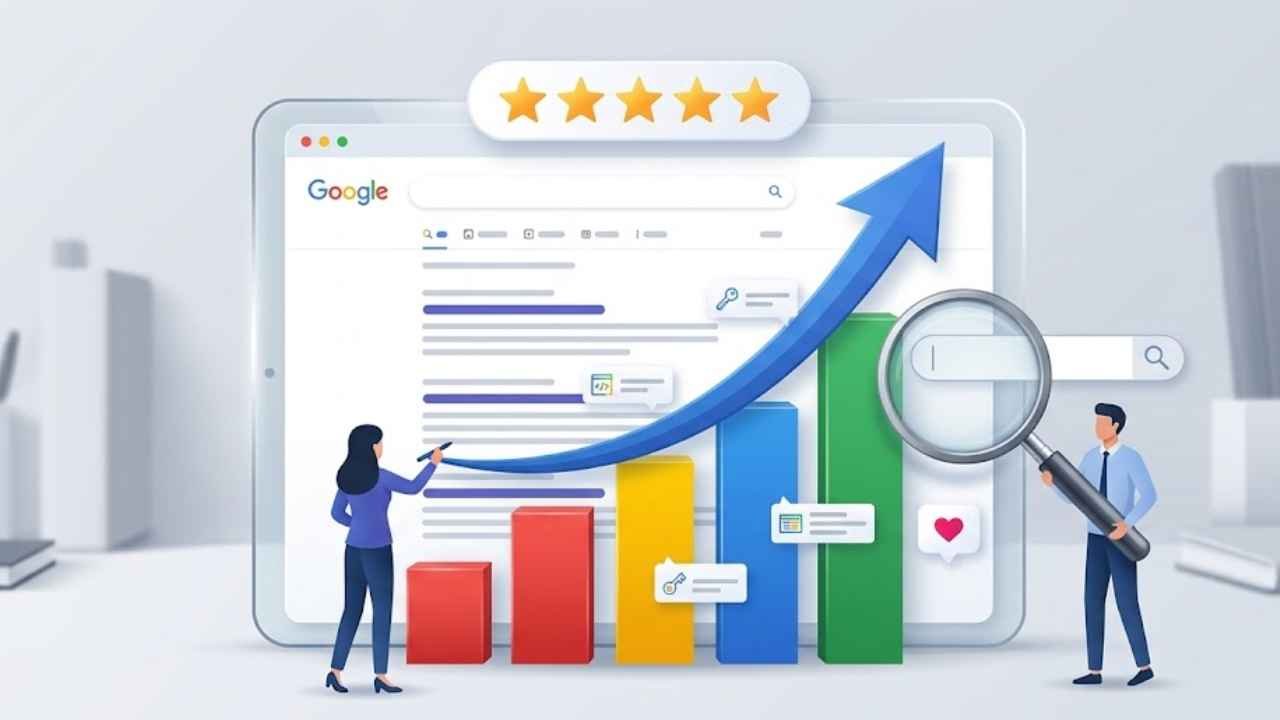
Only 0.63% of Google searchers click to page two of results. That single statistic explains why learning how to rank higher on Google is not optional for any business that wants organic traffic, it is survival.
The good news is that Google’s ranking systems follow clear, learnable principles. This guide breaks them down into a practical framework any entrepreneur or marketer can follow, even without a technical background.
Why Google Rankings Matter More Than Ever in 2026
Google processes more than 8.5 billion searches every day. For most websites, organic search drives more traffic than every other channel combined. Paid ads stop the moment budgets run dry. Social media reach is unpredictable. Organic rankings, built correctly, compound over time.
Google’s ranking systems have also grown more sophisticated. The 2026 algorithm and spam updates have raised the bar for content quality, penalizing scaled low-quality AI content and rewarding sites that demonstrate genuine expertise and real-world experience. Understanding these systems before optimizing is the smartest first move any beginner can make.
Step 1: Build a Solid Technical SEO Foundation
Learning how to rank higher on Google starts underground, with the technical infrastructure of a website. If Google cannot crawl and index a site, nothing else matters.
Crawlability and Indexing
Google uses bots called crawlers to discover and read web pages. A few simple checks can confirm the site is accessible:
- robots.txt file, Make sure it is not accidentally blocking important pages
- XML sitemap, Submit one through Google Search Console so crawlers find all key pages
- No broken links, Broken internal links waste crawl budget and frustrate users
- Canonical tags, Use them to prevent duplicate content from confusing Google
HTTPS Is Non-Negotiable
Sites still running on HTTP receive a security warning in Chrome and a quiet ranking disadvantage. Switching to HTTPS via an SSL certificate is a baseline requirement, not a bonus.
Core Web Vitals
Google’s Core Web Vitals measure real user experience across three dimensions:
| Metric | What It Measures | Good Score |
|---|---|---|
| LCP (Largest Contentful Paint) | Loading speed of main content | Under 2.5 seconds |
| INP (Interaction to Next Paint) | Responsiveness to user input | Under 200 milliseconds |
| CLS (Cumulative Layout Shift) | Visual stability of the page | Under 0.1 |
Use Google’s free PageSpeed Insights tool to check scores and get specific recommendations.
Step 2: Optimize On-Page Structure
Once the technical foundation is solid, on-page SEO shapes how Google understands and ranks individual pages.
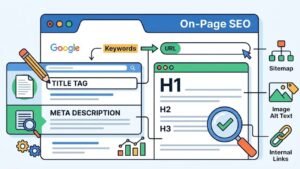
Title Tags and Meta Descriptions
The title tag is the blue clickable headline in search results. It should:
- Include the primary keyword near the beginning
- Stay between 50 and 60 characters
- Be unique for every page
Meta descriptions do not directly influence rankings, but a compelling one improves click-through rates, which sends positive signals back to Google.
Headings, URLs, and Internal Links
Headings (H1, H2, H3) give Google a clear outline of page content. Use one H1 per page containing the main keyword. Use H2s and H3s to organize subtopics logically.
URLs should be short, readable, and keyword-rich. Compare these two examples:
- Poor:
website.com/p?id=4829 - Strong:
website.com/how-to-rank-higher-on-google
Internal links connect related pages together. They distribute authority across the site and help users (and crawlers) navigate. Every important page should receive at least a few internal links from other relevant pages.
Step 3: Create Helpful, Intent-Matched Content
“Helpful content is not just a best practice, in 2026, it is the primary ranking lever Google uses to separate winners from losers in the search results.”
This is where most beginners either win big or waste enormous effort. Google’s systems are designed to reward content that genuinely satisfies the user’s intent behind a search query.
Understanding Search Intent
Every search query has an intent behind it. The four main types are:
- Informational, The user wants to learn something (“how to rank higher on google”)
- Navigational, The user wants to find a specific site (“Google Search Console login”)
- Commercial, The user is comparing options (“best SEO tools 2026”)
- Transactional, The user is ready to act (“buy SEO audit service”)
Matching content format and depth to the correct intent is more important than keyword density. A blog post trying to rank for a transactional query will almost always lose to a product or service page.
Writing for Both Humans and AI Features
Google’s AI Overviews and AI Mode now appear at the top of many search results. To earn visibility in these features, content should:
- Answer questions directly and concisely early in the page
- Use clear structure (headings, bullet points, short paragraphs)
- Demonstrate factual accuracy and cite specific details
- Avoid vague filler language that adds length without adding value
Scaled, low-quality AI content, the kind the August 2026 spam update specifically targeted, does the opposite of these things. Volume without quality is a liability, not an asset.
Step 4: Build E-E-A-T and Brand Authority
E-E-A-T stands for Experience, Expertise, Authoritativeness, and Trustworthiness. Google uses these signals to evaluate whether a source deserves to rank for a given topic, especially in health, finance, and legal categories.
Practical Ways to Build E-E-A-T
- Author bios, Include real author names, credentials, and links to professional profiles
- About page, Clearly explain who runs the site and what qualifies them to cover the topic
- Original research and first-hand experience, Share data, case studies, or personal results that only someone with real experience could produce
- Backlinks from authoritative sites, When reputable websites link to a page, it signals that the content is trustworthy
- Brand mentions, Even unlinked mentions of a brand name across the web contribute to entity signals Google tracks
Building these signals takes time. Consistency matters more than speed.
Step 5: Prioritize Local SEO (For Location-Based Businesses)
Businesses serving a specific geographic area should treat local SEO as the first priority, not an afterthought.
A phased local SEO approach looks like this:
- Claim and optimize a Google Business Profile, Complete every field, add photos, and collect genuine customer reviews
- Build local citations, Ensure the business name, address, and phone number (NAP) are consistent across directories like Yelp, Apple Maps, and industry-specific listings
- Create locally relevant content, Blog posts, landing pages, and FAQs that reference the city or region signal local relevance to Google
- Earn local backlinks, Sponsorships, local press coverage, and chamber of commerce listings all help
Local search results operate somewhat differently from national organic results, and a focused local strategy often produces faster, more measurable results for small businesses.
Step 6: Monitor, Measure, and Iterate
Knowing how to rank higher on Google is not a one-time project. Google releases multiple core updates and spam updates every year. Volatility is normal.
Essential Free Tools for Tracking Progress
- Google Search Console, Shows which queries drive impressions and clicks, flags indexing errors, and reports Core Web Vitals data
- Google Analytics 4, Tracks organic traffic trends, user behavior, and conversions
- Google PageSpeed Insights, Measures technical performance and Core Web Vitals
The Right Response to Algorithm Updates
When rankings drop after an update, the instinct is to panic and make sweeping changes. A better approach:
- Wait 2-4 weeks for volatility to settle
- Compare traffic data before and after the update
- Identify which pages lost rankings and audit their content quality
- Make targeted improvements based on data, not guesswork
- Resubmit updated pages through Google Search Console
Reactive, fear-based changes often do more damage than the original update.
Final Thoughts
Ranking higher on Google in 2026 is not about tricks or shortcuts. It is about building a site Google can trust, technically sound, clearly structured, and packed with content that genuinely helps real people. Start with the technical foundation, then layer on strong on-page optimization, intent-matched content, and E-E-A-T signals. For local businesses, claim that Google Business Profile today.
Actionable next steps to take this week:
- Run the site through Google Search Console and fix any crawl or indexing errors
- Check Core Web Vitals scores in PageSpeed Insights and address the top issues
- Audit the five most important pages for search intent alignment and helpful content quality
- Add or update author bios with real credentials and experience
- Set a monthly calendar reminder to review Search Console data and track ranking progress
Organic growth is slow at first and then suddenly fast. The businesses that win are the ones that build the right habits early and stay consistent long after others give up.