
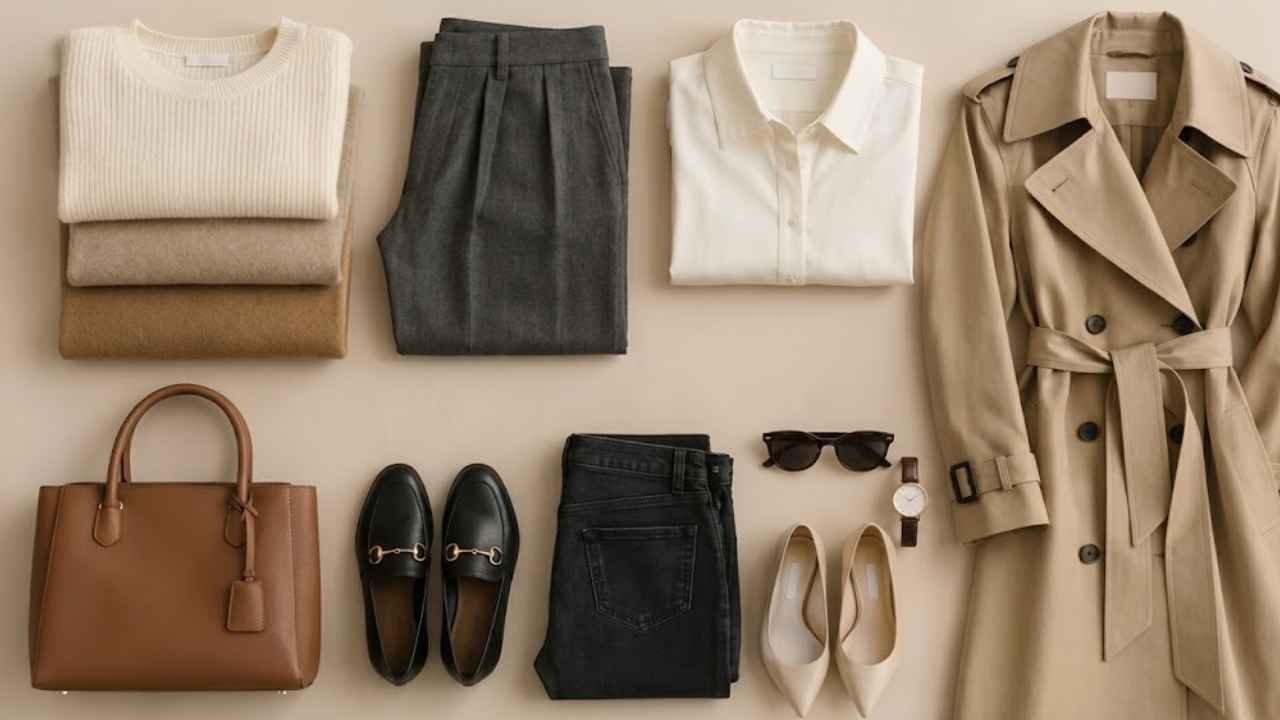
The average American closet holds roughly 100 to 150 items of clothing, yet most people wear only about 20 percent of those pieces on a regular basis. That gap between what we own and what we actually reach for is exactly why so many people are learning how to build a capsule wardrobe. A capsule wardrobe is not about owning less for the sake of it. It is about owning clothes that actually work, so getting dressed stops being a daily negotiation with a closet full of near-misses.
This guide walks through a practical, step-by-step process for building a capsule wardrobe from the ground up, whether you are starting a minimalist lifestyle, trying to simplify your work wardrobe, or just tired of shopping for things you never wear.
What Is a Capsule Wardrobe, Really?
A capsule wardrobe is a small, carefully chosen set of clothes designed to mix and match into many different outfits. Depending on lifestyle and climate, that can mean anywhere from 10 items for a very minimal traveler to 80 items for someone with a wide range of social and professional needs. For most beginners, though, the sweet spot lands between 25 and 40 core pieces. That range is small enough to make decisions easy, but large enough that you never feel stuck wearing the same three outfits on repeat.
The idea is not new, but the way people build capsules has changed. Instead of copying someone else’s exact 30-item list, current guidance treats a capsule wardrobe as a personal formula. Your job is to figure out your own categories, your own colors, and your own counts based on how you actually live.
A capsule wardrobe works because it removes decision fatigue. Every piece already fits your life, your coloring, and your other clothes, so there is no more guessing.
How to Build a Capsule Wardrobe in 7 Steps
Learning how to build a capsule wardrobe is easier when you break it into stages instead of trying to finish it in one weekend. Work through these seven steps in order, and resist the urge to jump straight to shopping.
Step 1: Declutter Before You Buy Anything New
Every recent capsule wardrobe framework agrees on one thing: start with what you already own, not with a shopping trip. Pull every single item out of your closet and drawers. Do not skip this step even if it feels tedious. Sort everything into simple piles:
- Love and wear, items you reach for often and feel good in
- Neutral or maybe, decent pieces you rarely choose but could work
- Never wear, items you have not touched in a year or more
This process turns guesswork into data. You are not deciding from memory what you “probably” wear. You are looking at physical evidence.
Step 2: Track What You Actually Wear for 30 Days
Once the closet is decluttered, spend the next 30 to 90 days simply paying attention. A simple method: pull out everything you wore in the last three months and lay it on the bed. Patterns will jump out immediately. Maybe you always reach for navy and white. Maybe every top you actually wear has sleeves you can push up. These repeating colors and silhouettes become the foundation of your capsule. From there, identify five to ten specific gaps, not a vague wish list, but concrete missing pieces like “a warm neutral cardigan” or “black flats that do not hurt.”
Step 3: Choose a Simple Color Palette
A capsule wardrobe only works if everything can be worn together, and color is what makes that possible. A practical formula many stylists now recommend:
| Palette Role | Example | Purpose |
|---|---|---|
| Anchor neutral 1 | Black | Base for bottoms and layers |
| Anchor neutral 2 | Navy | Alternate base for variety |
| Soft neutral | Beige or ivory | Softens contrast, works for tops |
| Accent color | Rust, olive, or berry | Adds personality without chaos |
Keep every new purchase inside this palette. If it does not fit, it does not join the capsule, no matter how much you like it in the store.
Step 4: Map Your Lifestyle to Outfit Categories
Before buying a single item, list where you actually spend your time: office, school pickups, commuting, workouts, social events, weekend errands. Then think in terms of complete outfits for each scenario, not a generic “must-have” list copied from the internet. If you rarely wear dresses, do not build a capsule around them just because a checklist says so. Back-solve from real outfits to the specific pieces that complete them, so every item earns its place by supporting more than one part of your week.
Step 5: Calculate How Many Pieces You Actually Need
Instead of chasing a fixed number like “33 items,” calculate counts based on your own routine. A simple formula: multiply the number of days between laundry loads by about 1.5 to estimate how many tops you need. If you do laundry every seven days, that is roughly ten to eleven tops. Apply similar logic to bottoms, layers, and shoes based on your climate and how often you repeat outfits comfortably.
Step 6: Test With a Micro-Capsule First
Before committing to a full wardrobe overhaul, try a micro-capsule. The 3-3-3 rule is a popular starting exercise: choose three tops, three bottoms, and three pairs of shoes that all mix and match, then wear only those combinations for one to two weeks. This small experiment teaches you which silhouettes, colors, and fabrics you genuinely enjoy wearing, without the risk of a big investment.
A useful ratio to keep in mind while testing: aim for roughly 70 percent neutral essentials and 30 percent personality pieces. This keeps the capsule functional without becoming boring.
Step 7: Shop With Fit, Fabric, and the 30-Wear Test in Mind
Once you know your gaps, shop slowly and deliberately. Before buying anything, check the fabric label before the price tag. Durable materials and good tailoring matter more than trends. Then ask one question: will you realistically wear this at least 30 times? If the honest answer is no, skip it. Pair this with a one-in, one-out rule, every new item displaces an old one, so the closet never quietly creeps back to its old size.
A piece only earns a spot in your capsule if it pairs with at least three to five other items you already own.
A Year-Round Capsule Wardrobe Starter Checklist
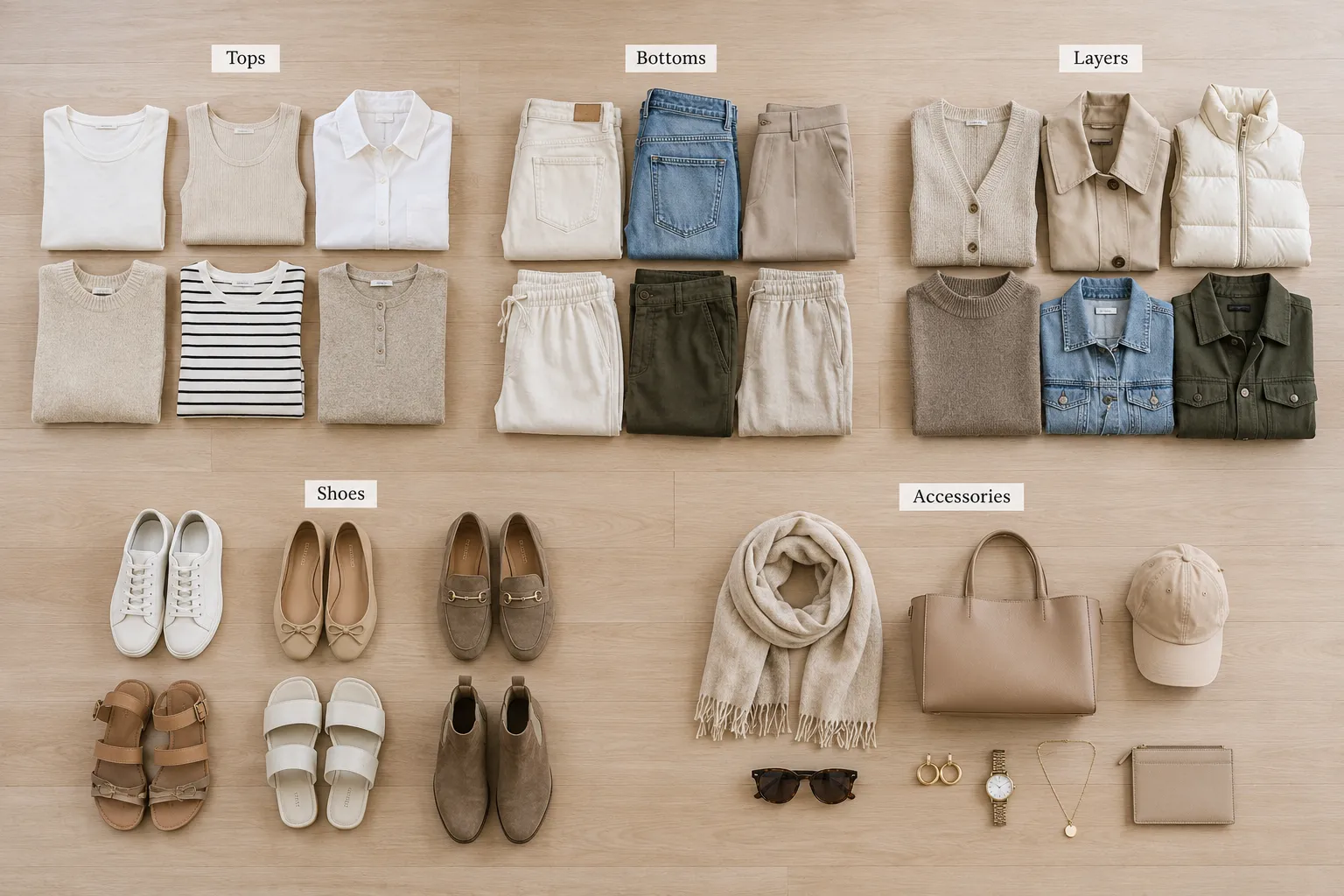
If you want a concrete starting point rather than building entirely from scratch, this baseline structure works well for most climates and can be adjusted for your own dress code:
- Tops: about 5 versatile pieces in your core colors
- Bottoms: about 4, mixing trousers, jeans, and a skirt if you wear them
- Dresses: about 3, for work or social occasions
- Layering pieces: about 4, including a blazer, cardigan, and outerwear
- Shoes: about 5 pairs covering work, casual, and weather needs
- Bags: about 4, from everyday to occasion-specific
- Accessories: about 5, kept simple and repeatable
Treat this as a template, not a rulebook. A parent chasing toddlers all day needs different shoes than someone commuting into an office five days a week. Adjust every category to match your real life before locking anything in.
How to Maintain a Capsule Wardrobe Through the Seasons
A capsule wardrobe is not a one-time project. It shifts with the seasons while keeping a stable core. The most effective approach is sorting your wardrobe into four seasonal groups, spring, summer, autumn, winter, and building a small capsule for each one.
Keep your neutral core consistent year-round. Then swap in a limited number of weather-specific pieces, like a wool coat in winter or sandals in summer, along with a few trend-led items each season if that appeals to you. This keeps your capsule flexible without letting it balloon back into wardrobe clutter.
A good rhythm to test this: live with a 25 to 30-item seasonal capsule for 30 to 60 days, then review it honestly. Which pieces did you wear constantly? Which ones sat untouched? Refine before the next season starts, rather than accumulating “just in case” items.
Common Mistakes That Sabotage a Capsule Wardrobe
Even well-intentioned attempts at a capsule wardrobe can fall apart. Watch for these common traps:
- Shopping before decluttering. Buying new “capsule basics” while your closet is still full of unworn clothes just adds more clutter.
- Copying someone else’s exact list. A capsule built for a warm climate office worker will not fit a cold climate parent at home.
- Ignoring fit and fabric. A neutral color does not save a piece that fits poorly or falls apart after five washes.
- Skipping the tracking phase. Guessing what you wear is far less reliable than actually recording it for a month.
- Treating the capsule as permanent. Bodies, jobs, and climates change. A capsule should be revisited each season, not set in stone.
Final Thoughts
Building a capsule wardrobe is less about owning fewer clothes and more about owning the right ones. The process rewards patience: declutter first, track your real habits, settle on a simple color palette, and test small before you commit to a full rebuild. Every step in this guide to how to build a capsule wardrobe is designed to replace guesswork with evidence, so the clothes you keep are the clothes you actually wear.
Start this week with one manageable action: empty one drawer or one section of your closet and sort it into the three piles described in Step 1. That single step puts real information in front of you, and real information is what turns a vague minimalist goal into a wardrobe that genuinely works every morning.