
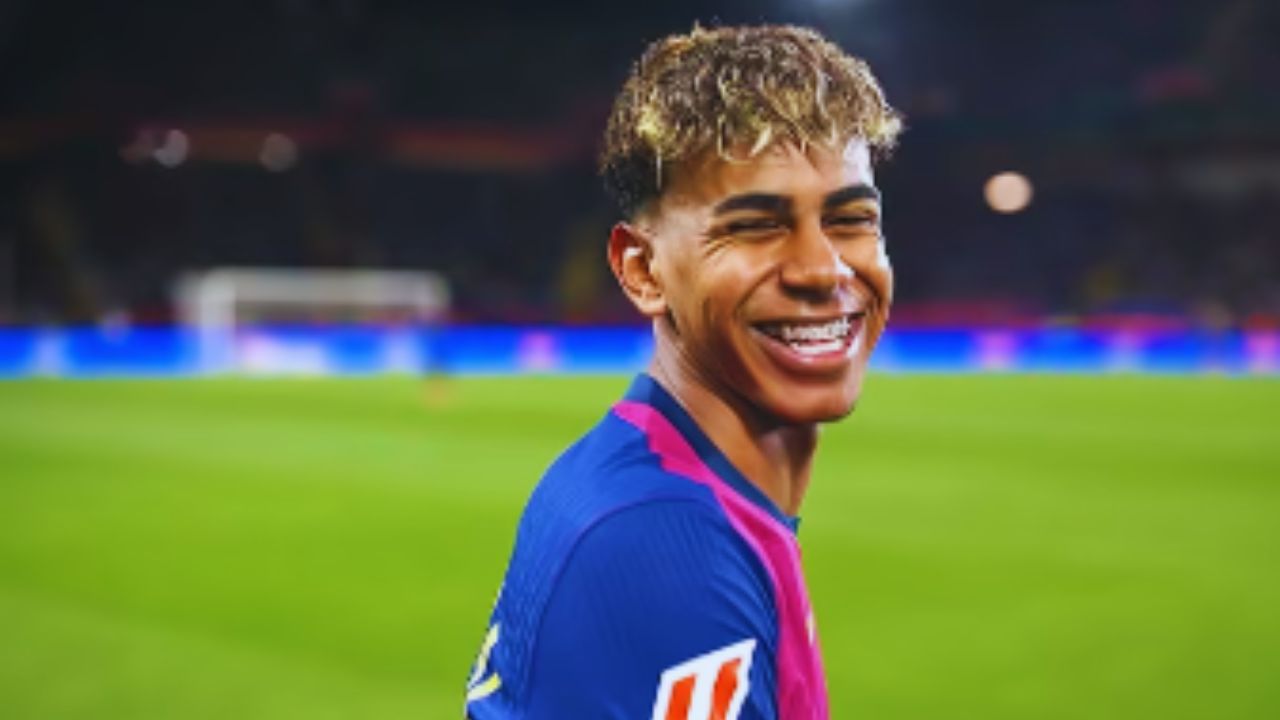
The football gaming world is buzzing after the release of EA Sports FC 26 player database, which projects the best XI for 2035. The lineup has been compiled using the highest potential ratings for players aged 22 or younger in the game.
This means the team is made up of footballers who are still developing but are tipped by EA Sports’ scouting system to become the world’s biggest stars within the next decade. Unsurprisingly, names from European giants like Barcelona, Real Madrid, Manchester United, PSG, and Chelsea dominate the list, reflecting both the strength of their academies and the accuracy of EA’s global scouting network.
Below is the full breakdown of EA’s predicted “team of the future,” with expanded insights on each player, their real-world progress, and why they have been chosen.
Goalkeeper
Guillaume Restes (Toulouse / France) – Potential 86
At just 19, Restes has already cemented himself as Toulouse’s No. 1 goalkeeper in Ligue 1. His maturity between the posts, reflexes, and distribution make him one of the most promising young goalkeepers in Europe.
According to reports in L’Équipe, Restes has already attracted interest from top clubs including Manchester City and PSG, while French national team selectors are monitoring his progress closely. EA FC ranks him higher than other young keepers such as James Trafford (Man City/Burnley) and Jonas Urbig (Bayern Munich), suggesting that Restes could become France’s long-term successor to Hugo Lloris and Mike Maignan..
Defenders
Right Back: Givairo Read (Feyenoord) – Potential 88
Read is one of the lesser-known names in the squad but has been developing steadily at Feyenoord. EA FC projects that he will outshine other rising full-backs like Tino Livramento (Newcastle) and Josh Acheampong (Chelsea).
What sets Read apart is his modern full-back style: pace, attacking instincts, and a calmness in one-on-one defensive situations. Over the summer, The Athletic linked him with potential moves to Liverpool and Barcelona, clubs that are constantly on the lookout for dynamic right-backs..
Centre Back: Pau Cubarsí (Barcelona / Spain) – Potential 88
Still a teenager, Cubarsí has already broken into Barcelona’s first team and looks like he has been playing top-level football for years. His positioning, composure on the ball, and tactical awareness have led analysts to describe him as “the next Gerard Piqué.”
Cubarsí also made his Spain debut at a very young age, proving his readiness for international football. Although his EA FC potential is set at 88, which might feel conservative given the hype, the reality is that predicting defenders’ careers is difficult. Injuries, tactical fit, and competition can heavily affect centre-backs more than forwards.
Even so, Cubarsí is tipped by many scouts as a future Ballon d’Or nominee for defenders, a rare accolade in today’s game.
Centre Back: Dean Huijsen (Real Madrid / Spain) – Potential 89
Huijsen has developed rapidly since moving to Real Madrid. At 20, his height, technical skills, and reading of the game make him a modern centre-back built for both defending and building attacks.
Spanish media such as Marca have highlighted how Huijsen could become a defensive leader for Madrid in the next decade, potentially captaining both club and country. His higher potential rating (89) compared to Cubarsí suggests EA FC views him as slightly more dominant in the long term.
If both Huijsen and Cubarsí reach their ceilings, Spain could have one of the most formidable centre-back partnerships in world football by 2035.
Left Back: Jorrel Hato (Chelsea / Netherlands) – Potential 89
Hato burst onto the scene at Ajax, captaining the side in his teens before a £35.5 million move to Chelsea, where he signed a seven-year deal.
Known for his versatility—he can play as a left-back or a centre-back—Hato is regarded as one of the Netherlands’ brightest prospects. EA ranks him above young stars like Alejandro Balde (Barcelona), which is significant considering Balde is already playing regularly at the highest level.
With his strong physique and technical confidence, Hato could become one of the defining full-backs of the 2030s, much like Alphonso Davies shaped the 2020s.
Midfielders
Pedri (Barcelona / Spain) – Potential 93
Few players embody the future of football as much as Pedri. Already a leader for Barcelona and Spain, he combines intelligence, vision, and composure in midfield that reminds many of Andrés Iniesta.
He ranked 11th in the most recent Ballon d’Or shortlist, surprising many who expected him to place higher given his consistency. At just 22, he already has over 150 appearances for Barcelona.
If he remains injury-free, EA FC predicts he will not only remain among the world’s best midfielders but also challenge for the Ballon d’Or in the 2030s.
João Neves (PSG / Portugal) – Potential 90
After breaking through at Benfica, João Neves secured a blockbuster transfer to Paris Saint-Germain, where he played a crucial role in their Champions League victory.
Praised by PSG manager Luis Enrique for his “intensity and quality on and off the ball,” Neves is admired for his tireless energy and ability to transition play. His potential of 90 reflects EA’s belief that he will anchor elite midfields for the next decade.
Jude Bellingham (Real Madrid / England) – Potential 94
Bellingham has already achieved what many players dream of: starring for Borussia Dortmund, becoming the face of England’s midfield, and now leading Real Madrid’s attack-minded midfield.
Still only in his early twenties, Bellingham has over 300 senior appearances. By 2035, he will be in his early thirties and, according to EA FC, could be one of the most decorated players in history.
With a potential of 94, he ranks just below Yamal but above other attacking midfield prospects like Florian Wirtz, Jamal Musiala, and Nico Paz.
Lamine Yamal (Barcelona / Spain) – Potential 95
Arguably the most exciting teenager in football, Lamine Yamal has broken records as the youngest player and scorer for both Barcelona and Spain.
With a staggering 95 potential, EA FC places him as the No. 1 footballer in the world by 2035. By then, he will only be 28 and theoretically at the peak of his career.
Analysts already predict he could become Barcelona’s franchise player for the next decade, with the ability to define matches like Lionel Messi once did.
Desire Doué (PSG / France) – Potential 91
Doué has been described as one of the most entertaining young players in Europe. After joining PSG, he has showcased flair, speed, and creativity that could make him a future Ballon d’Or contender.
EA FC rates him above peers like Antonio Nusa (RB Leipzig) and Rio Ngumoha (Liverpool). With a potential of 91, he is projected to dominate the left wing for PSG and France through the 2030s.
Forward
Benjamin Šeško (Manchester United / Slovenia) – Potential 88
At 22, Šeško has already played in the Austrian Bundesliga (Salzburg), the Bundesliga (RB Leipzig), and now the Premier League (Manchester United).
While his adaptation at United has been challenging, his physical attributes, finishing ability, and aerial dominance remind many of Erling Haaland. EA FC boldly projects him as the best striker in the world by 2035, overtaking today’s superstars like Kylian Mbappé and Haaland.
If his career trajectory continues upward, Šeško could lead both Manchester United’s attack and the Slovenian national team to unprecedented success.
What This Prediction Means
- Clubs represented: Barcelona (Yamal, Cubarsí, Pedri), Real Madrid (Bellingham, Huijsen), PSG (Neves, Doué), Manchester United (Šeško), Chelsea (Hato), Toulouse (Restes), Feyenoord (Read).
- National spread: Spain dominates with 4 players (Cubarsí, Pedri, Yamal, Huijsen), followed by France (Doué, Restes), Portugal (Neves), England (Bellingham), Netherlands (Hato), and Slovenia (Šeško).
- Future Ballon d’Or candidates: Yamal, Pedri, Bellingham, and Doué stand out as potential award winners.
- Defensive balance vs. attacking flair: EA predicts that the attacking stars will be more celebrated, but there’s also clear faith in defenders like Cubarsí and Huijsen to anchor the next generation.
EA FC 26’s projection of the best XI in 2035 gives us a glimpse of how football could look in the next decade. While these predictions are based on potential ratings, they also align with real-world scouting reports and current performances.
Of course, football is unpredictable—injuries, transfers, or career changes can alter any trajectory. But if these forecasts are even close to accurate, fans can expect the 2030s era of football to be dominated by Yamal, Pedri, Bellingham, and Šeško, with clubs like Barcelona, Real Madrid, PSG, and Manchester United continuing to lead the way.