

Most homeowners do not realize that the wrong sponge, the wrong cleaner, or simply too much water can permanently dull or strip a wall’s finish in a single cleaning session.
Knowing how to clean dirty walls without damaging the paint is not complicated, but it does require the right sequence and the right tools. This guide covers everything from dusting technique to stubborn grease removal, so walls stay fresh without sacrificing the finish.
Why Paint Finish Type Changes Everything
Not all painted walls can handle the same cleaning method. The sheen level of a paint determines how much scrubbing and moisture it can tolerate before showing damage.
| Paint Sheen | Washability | Recommended Approach |
|---|---|---|
| Flat / Matte | Very low | Barely damp cloth, minimal pressure |
| Eggshell | Low to moderate | Mild soap, gentle circular motion |
| Satin | Moderate | Mild soap, soft sponge |
| Semi-Gloss / Gloss | High | Mild soap, can tolerate more wiping |
Flat paint is the most fragile. It can burnish, develop shiny patches, from even light scrubbing. Satin and semi-gloss finishes are far more forgiving and are often labeled “washable” by manufacturers. Even so, major paint brands like Sherwin-Williams and Benjamin Moore recommend mild soap, warm water, and soft cloths for all sheens, including their most durable washable lines.
“The best way to clean walls without damaging paint is to use the least amount of water possible.”
The Right Tools for Safe Wall Cleaning
Using the correct tools is just as important as using the right cleaner. Abrasive pads, stiff brushes, and rough cloths can scratch or remove paint, especially on matte and eggshell surfaces.
Recommended tools:
- Microfiber cloths or flat microfiber mops
- Soft cellulose sponges
- Lambswool dusters for dry dusting
- Two clean buckets (one for soapy water, one for rinse water)
- Soft dry towels for patting surfaces dry
Tools to avoid:
- Steel wool or abrasive scrubbing pads
- Stiff-bristle brushes
- Rough paper towels
- Magic erasers on flat or matte finishes (they can remove pigment)
A long-handled microfiber mop is especially useful for reaching upper wall sections and ceilings without pressing too hard against the surface.
How to Clean Dirty Walls Without Damaging the Paint: Step-by-Step
This three-step process is the method recommended by professional painters, major paint manufacturers, and cleaning experts in 2026.
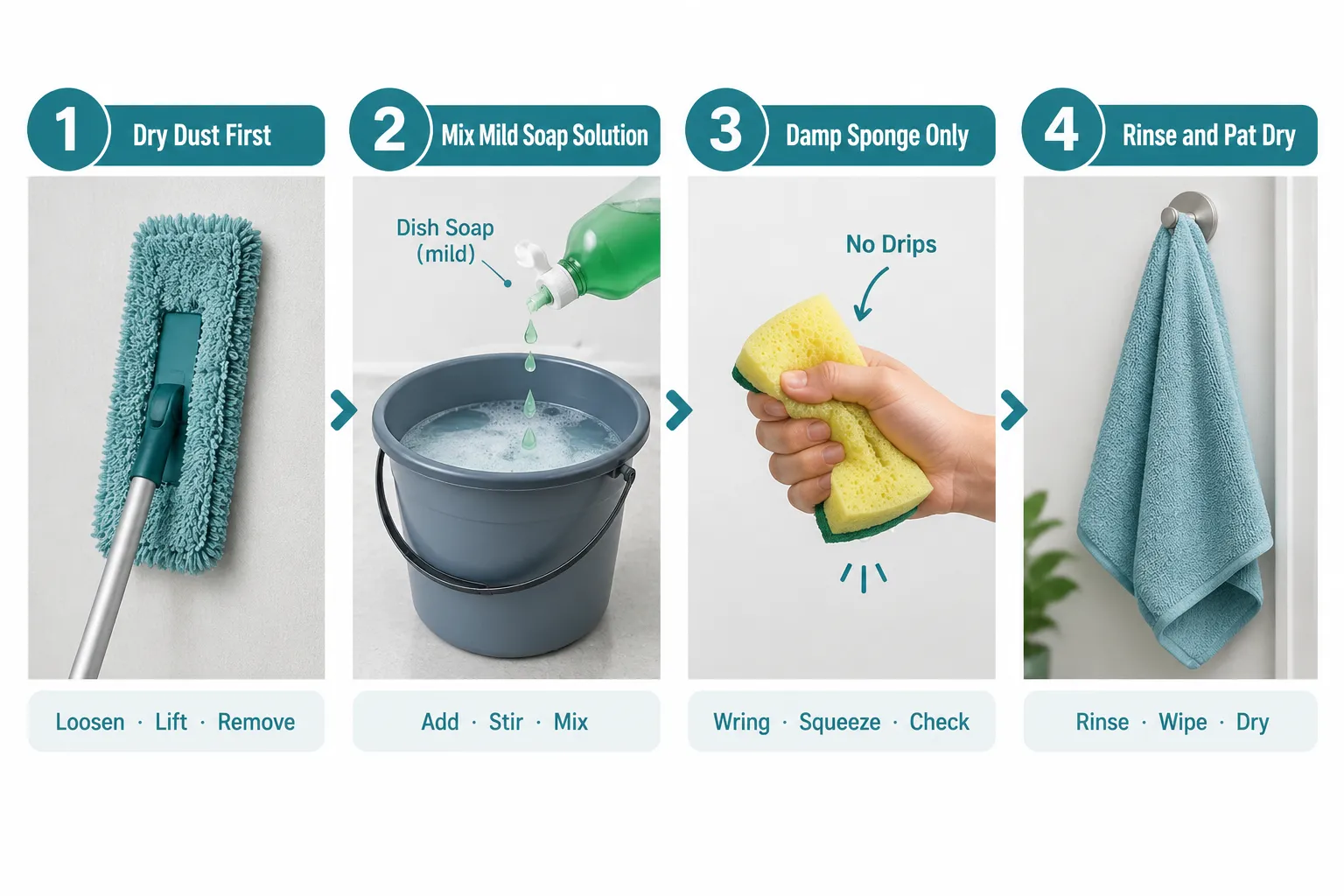
Step 1: Dry Dust the Wall First
Before any water touches the wall, remove loose dust, cobwebs, and surface dirt with a dry microfiber cloth or lambswool duster. Use overlapping strokes and work from top to bottom so debris falls downward.
Skipping this step is a common mistake. Wetting a dusty wall turns dry particles into a muddy paste that grinds into the paint and is harder to remove.
Step 2: Prepare a Mild Cleaning Solution
Fill a bucket with warm water and add a few drops of mild dish soap. That is the complete formula for most interior wall cleaning jobs. Bleach, ammonia, glass cleaners, and heavy-duty household sprays are unnecessary for routine cleaning and risk streaking or discoloring the paint. Benjamin Moore’s guidance specifically warns against glass cleaners and heavy spray cleaners on painted surfaces.
For greasy kitchen walls, a small amount of diluted degreasing dish soap in warm water is appropriate. Always test any new solution on a hidden patch of wall first and let it dry before proceeding.
Step 3: Clean in Small Sections, Rinse, and Dry
Work in 2 to 3-foot sections. Wring out the sponge or cloth thoroughly so it is damp, not dripping. Wipe the section using gentle circular motions with light pressure. Immediately follow with a second clean cloth dampened with plain water to rinse off soap residue. Then pat the area dry with a soft towel.
Never let water run down the wall. Drips and prolonged moisture can cause paint to bubble, peel, or separate from the surface over time.
How to Clean Dirty Walls Without Damaging the Paint in High-Traffic Areas
Hallways, kitchens, and areas near light switches collect the most grime. These spots need attention more often, but they also carry the highest risk of paint damage from repeated scrubbing.
- For fingerprints and scuff marks: Try plain warm water on a barely damp cloth first. Many fresh marks come off without any soap at all. If that does not work, use the mild dish soap solution described above.
- For greasy kitchen walls: Use warm water with a small amount of diluted degreasing soap. Apply gently, rinse immediately, and dry the surface right away. Do not let soapy water sit on the wall.
- For tougher marks on satin or semi-gloss: A 50/50 mix of white vinegar and water can help with stubborn stains on more durable sheens. Keep the cloth barely damp and test in a hidden area first.
- For scuffs on satin or semi-gloss only: A magic eraser used lightly and slightly damp can remove scuffs on tougher finishes. Never use a magic eraser on flat or matte paint, it will lift pigment and leave a shiny patch.
The key principle: focus on the specific dirty area rather than scrubbing the entire wall. Most interior paints are designed for periodic wiping, not full-surface washing. Treating the whole wall like a floor speeds up paint wear significantly.
Common Mistakes That Damage Paint During Cleaning
Even well-intentioned cleaning can cause lasting damage. Here are the most frequent errors to avoid:
- Using too much water. Soaked walls lead to bubbling, peeling, and mold growth behind the paint layer.
- Skipping the patch test. Any cleaner, even diluted vinegar, should be tested on a hidden spot before use on visible areas.
- Scrubbing flat paint. Flat and matte finishes burnish easily. One aggressive scrub can leave a permanent shiny mark.
- Using harsh chemicals. Bleach and ammonia can streak and discolor paint. Stick to mild dish soap for routine cleaning.
- Not rinsing off soap. Dried soap residue attracts more dirt and can dull the finish over time.
- Rubbing in straight lines with heavy pressure. Circular motions with light pressure distribute force more evenly and reduce the risk of lifting paint.
Final Thoughts
Keeping walls clean does not have to mean risking the finish. The core approach is straightforward: dust first, use mild soap and warm water, keep the sponge barely damp, work in small sections, rinse, and dry promptly. Matching the cleaning intensity to the paint sheen is the single most important factor in avoiding damage.
Actionable next steps:
- Identify the sheen level of the paint on each wall before cleaning
- Gather a microfiber cloth, a soft sponge, two buckets, and mild dish soap
- Start with dry dusting, then spot-clean the dirtiest areas first
- Test any new solution on a hidden patch and wait for it to dry before proceeding
- Check the paint manufacturer’s specific care instructions for washable or specialty coatings
Walls that are cleaned gently and regularly stay looking fresh far longer than those that are ignored and then scrubbed aggressively. A little care now prevents a costly repaint later.