
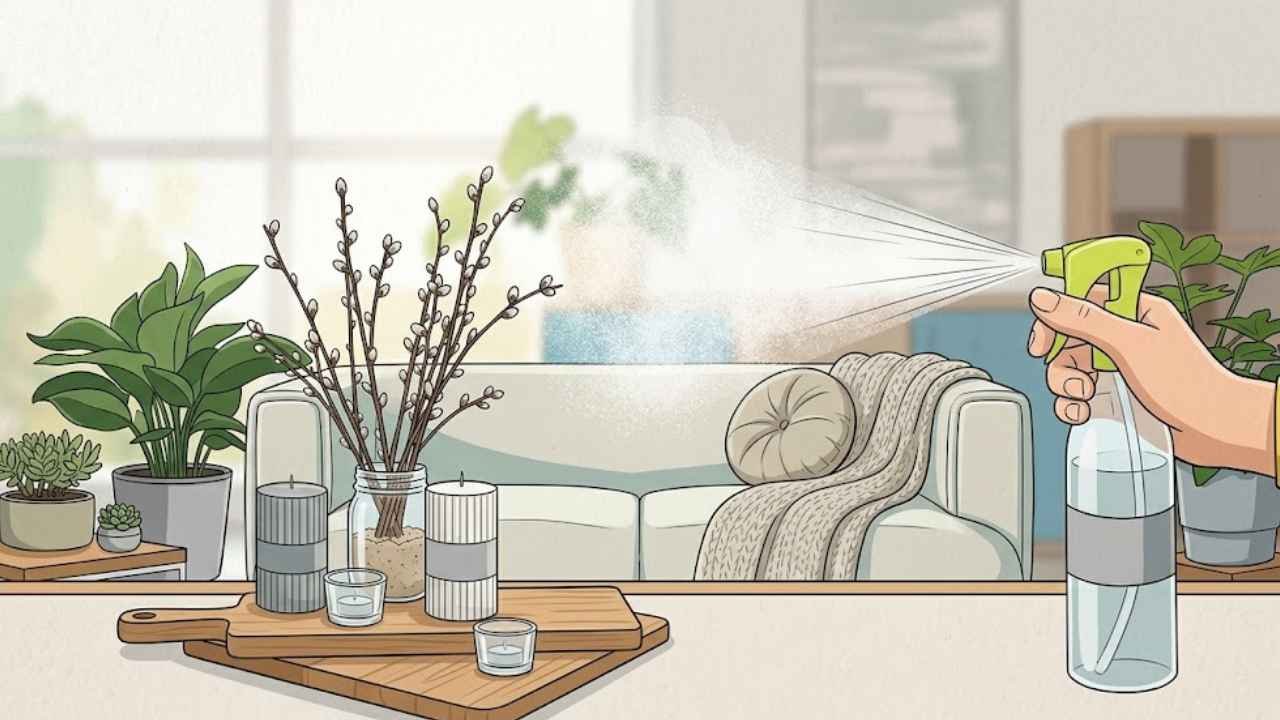
The average American spends roughly 90 percent of their time indoors, yet most homes harbor persistent odors that no amount of scented candles can truly fix. Masking a smell and eliminating it are two completely different things, and that distinction matters more than most people realize. This guide explains exactly how to remove bad smells from a room naturally, using methods backed by current expert guidance rather than marketing claims.
Why Masking Odors Makes the Problem Worse
Walk into most homes and the first response to a bad smell is to grab a spray can or plug in a diffuser. That approach feels logical but it is fundamentally flawed.
Fragrance-only products, sprays, plug-ins, scented candles, do almost nothing to address the biochemical sources of persistent or musty odors. They layer a new scent on top of the original problem. The underlying odor molecules remain active, continuing to off-gas from their source.
Worse, many so-called “natural” fragrance products, including essential oil diffusers, release volatile organic compounds (VOCs) into the air. These compounds can react with indoor ozone to create secondary pollutants. In 2026, expert guidance is increasingly clear: heavy fragrance use is not a neutral choice for indoor air quality.
“The goal is not to smell better. The goal is to remove the compounds that smell bad.”
The Three-Pillar Framework for Natural Odor Removal
Current best practice organizes natural odor removal around three core strategies. Using all three together produces far better results than relying on any single method.
- Pillar 1, Ventilation: Move contaminated air out and fresh air in.
- Pillar 2, Absorption: Draw odor molecules out of the air and off surfaces using absorbent materials.
- Pillar 3, Neutralization: Chemically convert odor compounds into non-odorous substances.
Each pillar handles different types of smells and different environments. The sections below break each one down practically.
How to Remove Bad Smells From a Room Naturally Using Ventilation
Natural ventilation is consistently ranked among the most effective odor-reduction methods available, and it costs nothing.
Creating an Effective Cross-Breeze
Opening a single window does relatively little. The key is airflow, not just open space. To create a cross-breeze:
- Open windows on opposite sides of the room or house
- Position a box fan in one window blowing outward to pull air through the space
- Keep interior doors open to allow air to move freely through the home
- Run this setup for a minimum of 15 to 30 minutes for mild odors, and up to several hours for strong or embedded smells
Ventilation works especially well for food odors, smoke, and general staleness. It is less effective for odors that have already absorbed into porous materials like carpets, upholstery, and drywall.
When to Ventilate
- Immediately after cooking strong-smelling foods
- After pets have accidents, before treating the surface
- During and after any cleaning process that disturbs odor-causing material
- On a regular schedule, even 10 minutes of cross-ventilation daily makes a measurable difference over time
How to Use Baking Soda to Remove Odors Naturally
Baking soda (sodium bicarbonate) is one of the most well-researched natural odor absorbers available. It works by reacting with acidic odor compounds and neutralizing them at the molecular level.
What Baking Soda Can and Cannot Do
| Odor Type | Does Baking Soda Work? |
|---|---|
| Food smells (acidic) | Yes, highly effective |
| Musty or mildew odors | Partially effective |
| Pet urine (ammonia-based) | No, ammonia is alkaline, not acidic |
| Biological contamination | No, requires enzymatic treatment |
| Smoke odors | Moderate, best combined with ventilation |
Step-by-Step: Using Baking Soda in a Room
For airborne odors:
- Place open bowls of plain baking soda around the room
- Leave in place for 24 to 48 hours for mild odors
- Replace every 30 days for ongoing odor maintenance, as baking soda becomes saturated and loses effectiveness
For surface odors (carpets, rugs, upholstery):
- Sprinkle a generous, even layer directly onto the dry surface
- Allow to sit for a minimum of 15 minutes; for embedded odors, leave for several hours or overnight
- Vacuum thoroughly using a machine with a HEPA filter if possible
- Repeat the process for heavily soiled textiles
Natural Odor Absorbers Beyond Baking Soda
Several other natural materials offer strong absorption properties.
- Activated charcoal: Highly porous and effective at trapping a wide range of VOCs and odor compounds. Place bags or loose charcoal in enclosed spaces like closets, cars, and bathrooms. Replace every 60 to 90 days.
- White vinegar: The acetic acid in white vinegar neutralizes alkaline odor compounds, making it the right tool for ammonia-based smells like pet urine, where baking soda falls short. Place a bowl of undiluted white vinegar in the room overnight, or use a diluted spray (1 part vinegar to 1 part water) on hard surfaces. The vinegar smell dissipates as it dries.
- Coffee grounds: Dry, unused coffee grounds absorb odors effectively in small enclosed spaces. Place in a bowl or open container. Best suited for refrigerators, closets, and pantries rather than large rooms.
- Zeolite: A naturally occurring mineral with exceptional absorption capacity. Available in bag form, zeolite absorbs moisture and odors simultaneously. Particularly useful in basements and bathrooms.
Tackling Odors in Textiles and Porous Surfaces
Carpets, mattresses, upholstered furniture, and curtains are the most common odor reservoirs in any home. They trap odor molecules deep within their fibers, which is why surface-level treatment rarely works.
Best Practices for Textiles
- Always treat the source before applying any absorbent. Blot up spills or accidents fully before sprinkling baking soda or applying vinegar.
- Allow absorbents to penetrate for longer periods, overnight is better than 15 minutes for mattresses and thick carpets.
- Extraction matters. Vacuuming alone after a baking soda treatment is less effective than using a wet-dry vacuum or a carpet cleaning machine that rinses and extracts moisture.
- For pet urine specifically, enzymatic cleaners made from natural biological cultures are the most effective option. These break down the uric acid crystals that standard cleaners leave behind.
- Wash removable fabric covers, cushion covers, and curtains regularly in hot water when the material allows.
How to Remove Bad Smells From a Room Naturally: A Room-by-Room Summary
- Kitchen: Ventilate during and after cooking. Place baking soda near the trash. Clean the drain weekly with baking soda and boiling water.
- Bathroom: Use activated charcoal or zeolite bags near the toilet. Ventilate after every shower to prevent mildew. Wipe surfaces with diluted white vinegar weekly.
- Bedroom: Sprinkle baking soda on the mattress monthly, leave for several hours, then vacuum. Open windows daily. Wash bedding every 1 to 2 weeks.
- Living room: Treat upholstery with baking soda quarterly. Use cross-ventilation regularly. Address pet accidents immediately with enzymatic treatment followed by baking soda.
- Basement: Activated charcoal and zeolite bags work well here. Address moisture first, musty smells almost always have a humidity source. A dehumidifier combined with natural absorbers is the most effective approach.
What to Avoid When Removing Odors Naturally
- Essential oil diffusers used as a primary strategy: They add VOCs to the air and do not remove odor sources
- Leaving natural absorbers in place indefinitely: Baking soda saturates within 30 days and stops working; charcoal needs replacement every 60 to 90 days
- Treating only the air while ignoring surfaces: The air will re-contaminate within hours if the source material is untreated
- Combining vinegar and baking soda as a cleaning solution: The two neutralize each other on contact, producing water and CO2 rather than a useful cleaner
Final Thoughts
Removing bad smells from a room naturally is not complicated, but it does require targeting the right problem with the right tool. Ventilation clears contaminated air. Baking soda neutralizes acidic compounds. White vinegar handles alkaline smells. Activated charcoal and zeolite absorb a broader range of VOCs. Enzymatic treatments break down biological contamination in textiles.
No single method works for every odor. The most effective approach in 2026 combines all three pillars, ventilation, absorption, and neutralization, applied consistently and refreshed on a regular schedule.
Actionable next steps:
- Identify the odor source before choosing a treatment method
- Ventilate the space first, every time
- Match the absorber or neutralizer to the odor type using the table above
- Set a monthly reminder to replace baking soda and a quarterly reminder to replace charcoal
- Treat textiles with longer contact times and proper extraction, not just surface application
Consistent, source-focused maintenance beats any fragrance product on the market, and it does so without adding chemicals to the air your family breathes every day.